Hydrogen Wheel Loader for Bulk Material Handling
Liebherr-Werk Bischofshofen GmbH deploys the L 566 H prototype at Georg Grube GmbH to reduce emissions in continuous port cargo operations. www.liebherr.com Liebherr-Werk Bischofshofen GmbH, Georg Grube GmbH, and Green Fuels GmbH are conducting a multi-year pilot project to evaluate a hydrogen-powered large wheel loader in port logistics. The trial assesses alternative powertrains in heavy-duty bulk material handling at the fishing port in Bremerhaven, Germany. Applications and Use Cases In the port logistics and construction materials sector, machines must operate on tightly scheduled workflows to prevent processing bottlenecks. At the Bremerhaven facility of Georg Grube GmbH, the wheel loader operates between crane systems, silo facilities, and storage areas. Specific use cases include feeding conveyor systems, transporting sand, gravel, and rock across storage yards, and loading processed bulk goods onto trucks. Operating with a hydrogen propulsion system allows the facility to maintain process stability and material throughput equivalent to conventional diesel machines while lowering operational exhaust emissions. Project Partners and Operational Challenge Heavy-duty material handling requires high continuous power output and rapid energy replenishment to avoid operational downtime. Transitioning heavy off-highway machinery to low-emission propulsion requires simultaneously testing machine reliability and fuel supply logistics. Cooperation between the equipment manufacturer Liebherr-Werk Bischofshofen GmbH, the port operator Georg Grube GmbH, and the energy provider Green Fuels GmbH was necessary to integrate machine engineering, industrial bulk handling operations, and regional fuel infrastructure within a unified testing environment. Technical Solution and Responsibilities The core technical system is the L 566 H prototype large wheel loader developed by Liebherr-Werk Bischofshofen GmbH. Designed as a complementary technology to battery-electric powertrains for energy-intensive off-highway applications, the machine utilizes green hydrogen as its energy carrier. Within the partnership, Liebherr-Werk Bischofshofen GmbH provides the prototype machine and oversees technical powertrain evaluation. Georg Grube GmbH integrates the machine into scheduled port handling workflows to evaluate practical suitability. Green Fuels GmbH manages the regional energy supply chain. Electricity generated by local wind turbines powers an electrolyser operated by HY.City.Bremerhaven to produce green hydrogen, which is transported via mobile storage trailers to the refuelling site. Deployment and Infrastructure Integration The multi-year field trial takes place at the Bremerhaven fishing port as part of the H2B:IMPACT project, a Hydrogen Valley initiative funded by the EU and the Clean Hydrogen Partnership (CHP). To integrate the machine into daily operations without extending shift turnaround times, a dedicated hydrogen refuelling station was commissioned on the premises of the Fraunhofer IWES Hydrogen Lab in Bremerhaven, enabling rapid refuelling directly after work shifts. “The pilot project at the fishing harbour offers ideal conditions for development: the Bremerhaven region has the necessary infrastructure to supply our hydrogen-powered machine, enabling us to test the wheel loader under real-world conditions,” reports Günther Holzer, Technical Managing Director of Liebherr-Werk Bischofshofen GmbH. Expected Operational Impact The deployment establishes a closed regional hydrogen value chain linking wind-powered electrolysis, mobile high-pressure storage, and heavy-duty mechanical work. Evaluating the L 566 H alongside existing fuel cell buses and trucks increases baseline utilization of the regional refuelling infrastructure, generating operational data required to scale alternative drive systems to series production. “For the future market ramp-up, a network of hydrogen refuelling stations and additional vehicles are now required to ensure sufficient baseline utilisation of the infrastructure and thus enable economically viable operation,” said the Technical Managing Director of Liebherr-Werk Bischofshofen. Edited by Sucithra Mani, Induportals editor – adapted by AI. www.liebherr.com Powered by Induportals Media Publishing
 machineryasia
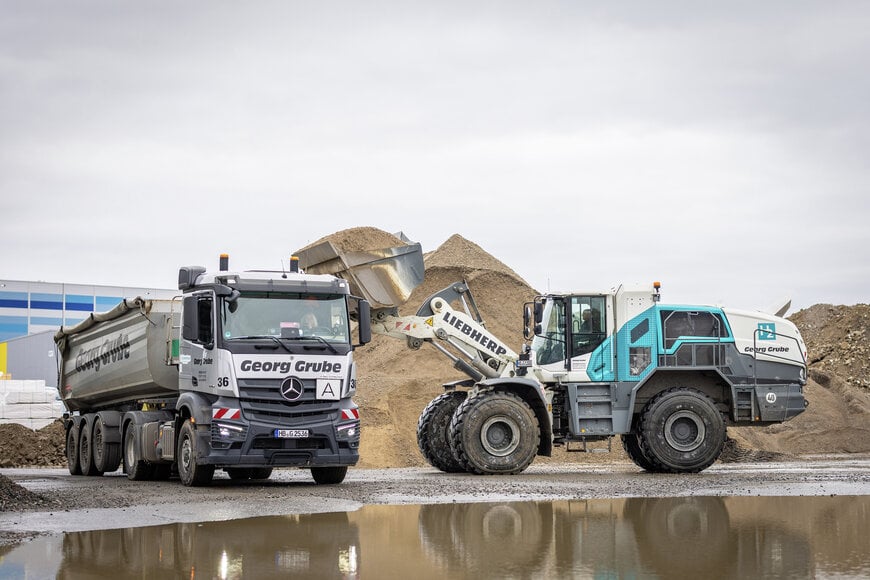
Liebherr-Werk Bischofshofen GmbH deploys the L 566 H prototype at Georg Grube GmbH to reduce emissions in continuous port cargo operations.
www.liebherr.com
Liebherr-Werk Bischofshofen GmbH, Georg Grube GmbH, and Green Fuels GmbH are conducting a multi-year pilot project to evaluate a hydrogen-powered large wheel loader in port logistics. The trial assesses alternative powertrains in heavy-duty bulk material handling at the fishing port in Bremerhaven, Germany.
Applications and Use Cases
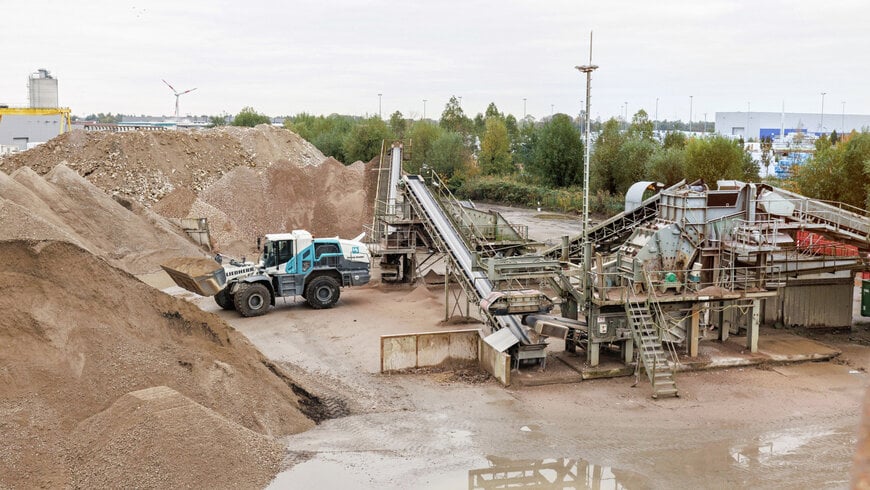
In the port logistics and construction materials sector, machines must operate on tightly scheduled workflows to prevent processing bottlenecks. At the Bremerhaven facility of Georg Grube GmbH, the wheel loader operates between crane systems, silo facilities, and storage areas. Specific use cases include feeding conveyor systems, transporting sand, gravel, and rock across storage yards, and loading processed bulk goods onto trucks. Operating with a hydrogen propulsion system allows the facility to maintain process stability and material throughput equivalent to conventional diesel machines while lowering operational exhaust emissions.
Project Partners and Operational Challenge
Heavy-duty material handling requires high continuous power output and rapid energy replenishment to avoid operational downtime. Transitioning heavy off-highway machinery to low-emission propulsion requires simultaneously testing machine reliability and fuel supply logistics. Cooperation between the equipment manufacturer Liebherr-Werk Bischofshofen GmbH, the port operator Georg Grube GmbH, and the energy provider Green Fuels GmbH was necessary to integrate machine engineering, industrial bulk handling operations, and regional fuel infrastructure within a unified testing environment.
Technical Solution and Responsibilities
The core technical system is the L 566 H prototype large wheel loader developed by Liebherr-Werk Bischofshofen GmbH. Designed as a complementary technology to battery-electric powertrains for energy-intensive off-highway applications, the machine utilizes green hydrogen as its energy carrier. Within the partnership, Liebherr-Werk Bischofshofen GmbH provides the prototype machine and oversees technical powertrain evaluation. Georg Grube GmbH integrates the machine into scheduled port handling workflows to evaluate practical suitability. Green Fuels GmbH manages the regional energy supply chain. Electricity generated by local wind turbines powers an electrolyser operated by HY.City.Bremerhaven to produce green hydrogen, which is transported via mobile storage trailers to the refuelling site.
Deployment and Infrastructure Integration
The multi-year field trial takes place at the Bremerhaven fishing port as part of the H2B:IMPACT project, a Hydrogen Valley initiative funded by the EU and the Clean Hydrogen Partnership (CHP). To integrate the machine into daily operations without extending shift turnaround times, a dedicated hydrogen refuelling station was commissioned on the premises of the Fraunhofer IWES Hydrogen Lab in Bremerhaven, enabling rapid refuelling directly after work shifts.
“The pilot project at the fishing harbour offers ideal conditions for development: the Bremerhaven region has the necessary infrastructure to supply our hydrogen-powered machine, enabling us to test the wheel loader under real-world conditions,” reports Günther Holzer, Technical Managing Director of Liebherr-Werk Bischofshofen GmbH.
Expected Operational Impact
The deployment establishes a closed regional hydrogen value chain linking wind-powered electrolysis, mobile high-pressure storage, and heavy-duty mechanical work. Evaluating the L 566 H alongside existing fuel cell buses and trucks increases baseline utilization of the regional refuelling infrastructure, generating operational data required to scale alternative drive systems to series production.
“For the future market ramp-up, a network of hydrogen refuelling stations and additional vehicles are now required to ensure sufficient baseline utilisation of the infrastructure and thus enable economically viable operation,” said the Technical Managing Director of Liebherr-Werk Bischofshofen.
Edited by Sucithra Mani, Induportals editor – adapted by AI.
www.liebherr.com
Powered by
Induportals Media Publishing