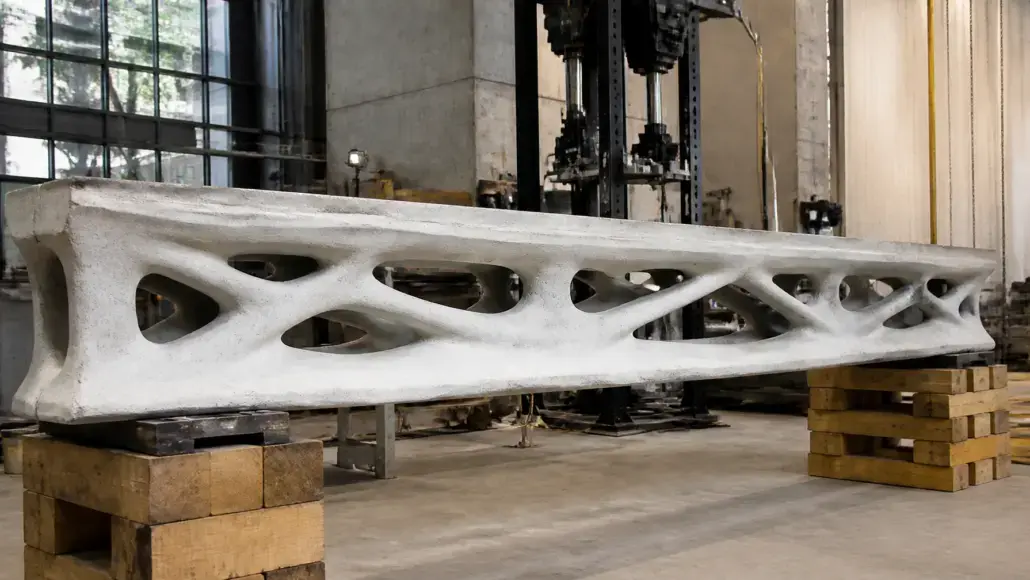
Enhancing Cement Composites with Carbon Nanofillers for Thermoelectric Energy Harvesting
A recent research published in Materials for Renewable and Sustainable Energy highlights how the integration of carbon nanofillers into cement composites creates measurable electrical conductivity. This advancement allows structural materials to function as conductive networks, which are highly effective for thermoelectric energy harvesting. By repurposing infrastructure, such as building envelopes and pavements, these materials can […] The post Enhancing Cement Composites with Carbon Nanofillers for Thermoelectric Energy Harvesting appeared first on World Construction Today.
 machineryasia
A recent research published in Materials for Renewable and Sustainable Energy highlights how the integration of carbon nanofillers into cement composites creates measurable electrical conductivity. This advancement allows structural materials to function as conductive networks, which are highly effective for thermoelectric energy harvesting. By repurposing infrastructure, such as building envelopes and pavements, these materials can help capture low-grade waste heat, potentially mitigating the urban heat island effect.
Experimental Methodology and Material Testing
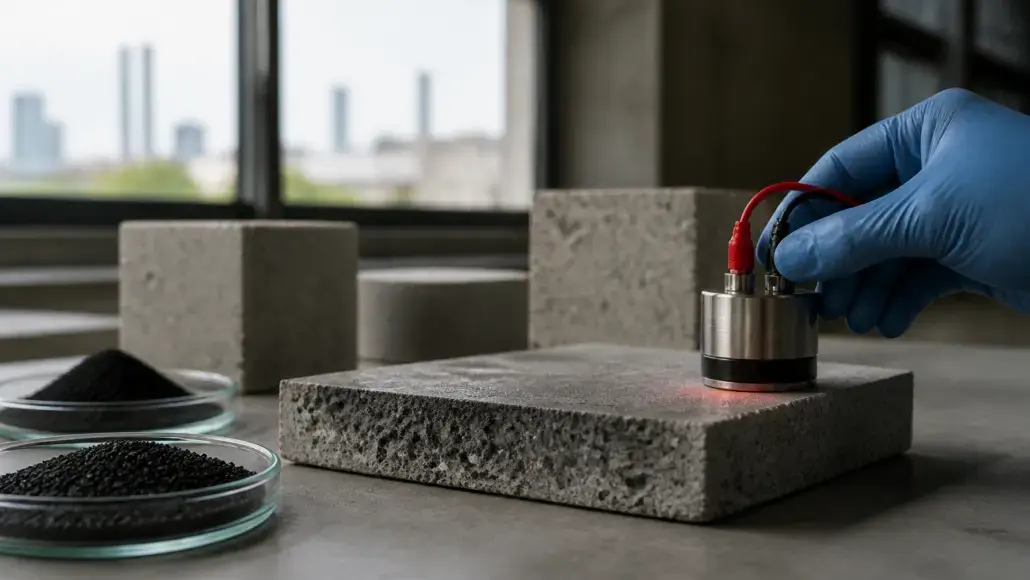
To determine the effectiveness of these materials, researchers tested three specific carbon-based additives within a cement matrix: super-grade graphene (SGG), multi-walled carbon nanotubes (MWCNT), and carbon soot-based carbon nanoparticles (CNP). The specimens were prepared using a wet casting method and subjected to rigorous diagnostic testing, including scanning electron microscopy (SEM), X-ray diffraction (XRD), and Raman spectroscopy.
These tests confirmed the formation of a dense microstructure and the physical establishment of conductive pathways. Systematic evaluation of the specimens was conducted via the four-point probe method to analyze the electrical response under varying temperatures.
Performance of Conductive Cement
The findings demonstrate significant improvements in material performance based on the specific nanofiller utilized:
- Multi-walled carbon nanotubes: A 15% dosage resulted in an electrical conductivity of 0.28 S/cm at 60 °C.
- Super-grade graphene: A 2% concentration achieved 0.072 S/cm at temperatures of 65 °C and 75 °C.
- Carbon nanoparticles: A 5% dosage reached 0.033 S/cm at 85 °C.
Mechanisms of Charge Transport
The observed increase in performance within these cement composites is attributed to complex physical mechanisms. Data suggests that the percolation threshold, electron tunnelling, and hopping conduction work in unison to facilitate efficient charge transport through the nanofiller network. Ultimately, the use of carbon nanofillers enables structural cement to serve as a functional medium for thermoelectric energy harvesting, providing a viable method to recover low-grade waste heat from modern construction environments.
The post Enhancing Cement Composites with Carbon Nanofillers for Thermoelectric Energy Harvesting appeared first on World Construction Today.