Compact Equipment for High-Density Job Sites
Doosan Bobcat presents compact machinery at SMOPYC to address productivity, maneuverability, and operational efficiency in Iberian construction and rental markets. www.bobcat.com At the 2026 edition of SMOPYC in Zaragoza, Doosan Bobcat EMEA introduced a range of compact machines engineered for constrained work environments, emphasizing operational efficiency, ease of transport, and adaptability across construction, rental, and urban applications. Product Strategy Aligned with Market Demand The equipment portfolio presented reflects a shift in the construction and rental sectors toward compact, versatile machines capable of operating efficiently in space-constrained environments. This trend is particularly relevant in the Iberian market, where urban development, infrastructure maintenance, and short-term rental applications require high maneuverability and simplified operation. Bobcat’s approach integrates compact dimensions with functional versatility, targeting improved productivity per operating hour. The machines are designed to reduce setup time, simplify operator training, and maintain consistent performance across varied tasks—key parameters in a digital supply chain where equipment utilization rates directly impact project timelines and cost efficiency. The company also emphasized proximity to customers and a broad product range, positioning its compact equipment as high-turnover assets suitable for fleet operators and rental companies. Technical Focus: Compactness and Operational Efficiency A central theme of the showcased portfolio is “intelligent compactness” the ability to maintain functional performance while reducing machine footprint. This includes: Optimized weight-to-performance ratios for easier transport Reduced swing radius and machine width for confined job sites Simplified control systems to lower operator learning curves Multi-application capability to support diverse workflows Such characteristics are particularly relevant in urban construction, industrial maintenance, and rental scenarios, where machines must transition quickly between tasks without extensive reconfiguration. Key Equipment and Use Cases Among the machines presented, the Bobcat E17z mini excavator illustrates how compact design directly impacts operational safety and efficiency. Its Zero House Swing configuration eliminates rear overhang beyond the track width, allowing operation close to walls or obstacles without collision risk. This design is particularly suited to urban excavation, indoor demolition, and renovation projects where space constraints are critical. The machine’s low operating weight also enables transport using light-duty trailers, reducing logistical complexity and improving deployment speed across multiple job sites. The Bobcat TL25.60 super-compact telescopic handler extends this concept into material handling applications. By combining reduced dimensions with lifting capability, it supports operations in confined industrial zones, warehouses, and construction sites where standard telehandlers would be impractical. Its design enables vertical reach and load handling without requiring large operating clearances, improving efficiency in dense work environments. Industry Response and Application Context Visitor feedback at the event indicated strong interest in compact equipment solutions that balance maneuverability with productivity. This reflects broader industry requirements for machines that can operate in restricted spaces while maintaining output levels comparable to larger equipment. Applications highlighted include: Urban construction and infrastructure maintenance Equipment rental fleets requiring high utilization rates Industrial operations in confined facilities Multi-tasking job sites where equipment versatility reduces fleet size The positive reception underscores the importance of aligning machine design with real-world operational constraints, particularly in markets where space, transportability, and ease of use are critical performance factors. Position Within the Compact Equipment Segment Within the compact machinery segment, performance is typically evaluated based on parameters such as operating weight, turning radius, lifting capacity, and transport requirements. Bobcat’s presented models align with these benchmarks by prioritizing reduced footprint without compromising core functional metrics. While comparable compact excavators and telehandlers exist across the industry, differentiation in this segment increasingly depends on usability, transport efficiency, and adaptability to multiple applications rather than maximum output alone. Conclusion The equipment presented by Doosan Bobcat EMEA at SMOPYC demonstrates a clear engineering focus on compact, high-efficiency machinery tailored to modern construction and rental workflows. By integrating maneuverability, simplified operation, and transport efficiency, the company addresses the growing demand for flexible eq
 machineryasia
Doosan Bobcat presents compact machinery at SMOPYC to address productivity, maneuverability, and operational efficiency in Iberian construction and rental markets.
www.bobcat.com
At the 2026 edition of SMOPYC in Zaragoza, Doosan Bobcat EMEA introduced a range of compact machines engineered for constrained work environments, emphasizing operational efficiency, ease of transport, and adaptability across construction, rental, and urban applications.
Product Strategy Aligned with Market Demand
The equipment portfolio presented reflects a shift in the construction and rental sectors toward compact, versatile machines capable of operating efficiently in space-constrained environments. This trend is particularly relevant in the Iberian market, where urban development, infrastructure maintenance, and short-term rental applications require high maneuverability and simplified operation.
Bobcat’s approach integrates compact dimensions with functional versatility, targeting improved productivity per operating hour. The machines are designed to reduce setup time, simplify operator training, and maintain consistent performance across varied tasks—key parameters in a digital supply chain where equipment utilization rates directly impact project timelines and cost efficiency.
The company also emphasized proximity to customers and a broad product range, positioning its compact equipment as high-turnover assets suitable for fleet operators and rental companies.
Technical Focus: Compactness and Operational Efficiency
A central theme of the showcased portfolio is “intelligent compactness” the ability to maintain functional performance while reducing machine footprint. This includes:
- Optimized weight-to-performance ratios for easier transport
- Reduced swing radius and machine width for confined job sites
- Simplified control systems to lower operator learning curves
- Multi-application capability to support diverse workflows
Such characteristics are particularly relevant in urban construction, industrial maintenance, and rental scenarios, where machines must transition quickly between tasks without extensive reconfiguration.
Key Equipment and Use Cases
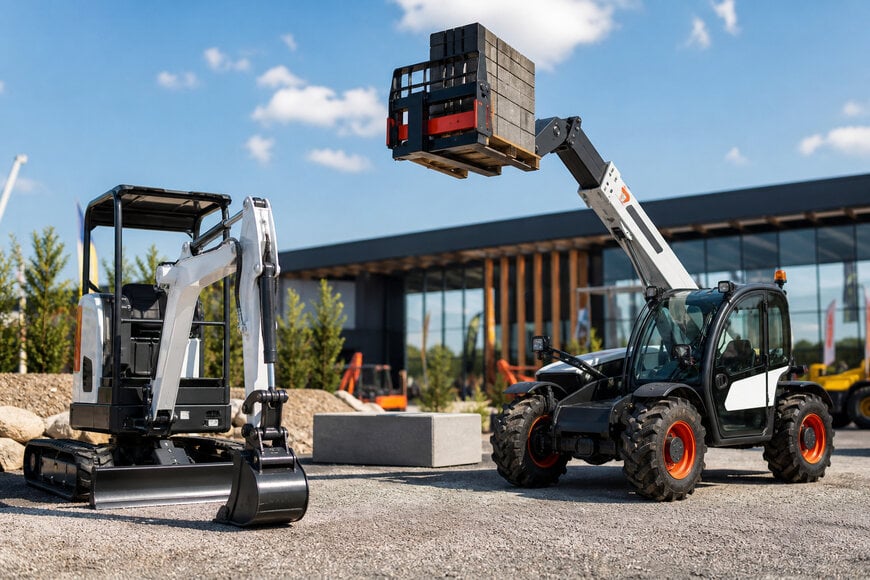
Among the machines presented, the Bobcat E17z mini excavator illustrates how compact design directly impacts operational safety and efficiency. Its Zero House Swing configuration eliminates rear overhang beyond the track width, allowing operation close to walls or obstacles without collision risk. This design is particularly suited to urban excavation, indoor demolition, and renovation projects where space constraints are critical.
The machine’s low operating weight also enables transport using light-duty trailers, reducing logistical complexity and improving deployment speed across multiple job sites.
The Bobcat TL25.60 super-compact telescopic handler extends this concept into material handling applications. By combining reduced dimensions with lifting capability, it supports operations in confined industrial zones, warehouses, and construction sites where standard telehandlers would be impractical. Its design enables vertical reach and load handling without requiring large operating clearances, improving efficiency in dense work environments.
Industry Response and Application Context
Visitor feedback at the event indicated strong interest in compact equipment solutions that balance maneuverability with productivity. This reflects broader industry requirements for machines that can operate in restricted spaces while maintaining output levels comparable to larger equipment.
Applications highlighted include:
Key Equipment and Use Cases
Among the machines presented, the Bobcat E17z mini excavator illustrates how compact design directly impacts operational safety and efficiency. Its Zero House Swing configuration eliminates rear overhang beyond the track width, allowing operation close to walls or obstacles without collision risk. This design is particularly suited to urban excavation, indoor demolition, and renovation projects where space constraints are critical.
The machine’s low operating weight also enables transport using light-duty trailers, reducing logistical complexity and improving deployment speed across multiple job sites.
The Bobcat TL25.60 super-compact telescopic handler extends this concept into material handling applications. By combining reduced dimensions with lifting capability, it supports operations in confined industrial zones, warehouses, and construction sites where standard telehandlers would be impractical. Its design enables vertical reach and load handling without requiring large operating clearances, improving efficiency in dense work environments.
Industry Response and Application Context
Visitor feedback at the event indicated strong interest in compact equipment solutions that balance maneuverability with productivity. This reflects broader industry requirements for machines that can operate in restricted spaces while maintaining output levels comparable to larger equipment.
Applications highlighted include:
- Urban construction and infrastructure maintenance
- Equipment rental fleets requiring high utilization rates
- Industrial operations in confined facilities
- Multi-tasking job sites where equipment versatility reduces fleet size
The positive reception underscores the importance of aligning machine design with real-world operational constraints, particularly in markets where space, transportability, and ease of use are critical performance factors.
Position Within the Compact Equipment Segment
Within the compact machinery segment, performance is typically evaluated based on parameters such as operating weight, turning radius, lifting capacity, and transport requirements. Bobcat’s presented models align with these benchmarks by prioritizing reduced footprint without compromising core functional metrics.
While comparable compact excavators and telehandlers exist across the industry, differentiation in this segment increasingly depends on usability, transport efficiency, and adaptability to multiple applications rather than maximum output alone.
Conclusion
The equipment presented by Doosan Bobcat EMEA at SMOPYC demonstrates a clear engineering focus on compact, high-efficiency machinery tailored to modern construction and rental workflows. By integrating maneuverability, simplified operation, and transport efficiency, the company addresses the growing demand for flexible equipment capable of sustaining productivity in constrained and dynamic job environments.
Edited by an industrial journalist Sucithra Mani with AI assistance.
www.bobcat.com
Position Within the Compact Equipment Segment
Within the compact machinery segment, performance is typically evaluated based on parameters such as operating weight, turning radius, lifting capacity, and transport requirements. Bobcat’s presented models align with these benchmarks by prioritizing reduced footprint without compromising core functional metrics.
While comparable compact excavators and telehandlers exist across the industry, differentiation in this segment increasingly depends on usability, transport efficiency, and adaptability to multiple applications rather than maximum output alone.
Conclusion
The equipment presented by Doosan Bobcat EMEA at SMOPYC demonstrates a clear engineering focus on compact, high-efficiency machinery tailored to modern construction and rental workflows. By integrating maneuverability, simplified operation, and transport efficiency, the company addresses the growing demand for flexible equipment capable of sustaining productivity in constrained and dynamic job environments.
Edited by an industrial journalist Sucithra Mani with AI assistance.
www.bobcat.com
Powered by
Induportals Media Publishing