China’s Currency Manipulation Should Be on the Trump-Xi Agenda
A carefully managed yuan allows Beijing to blunt the impact of U.S. tariffs.
 machineryasia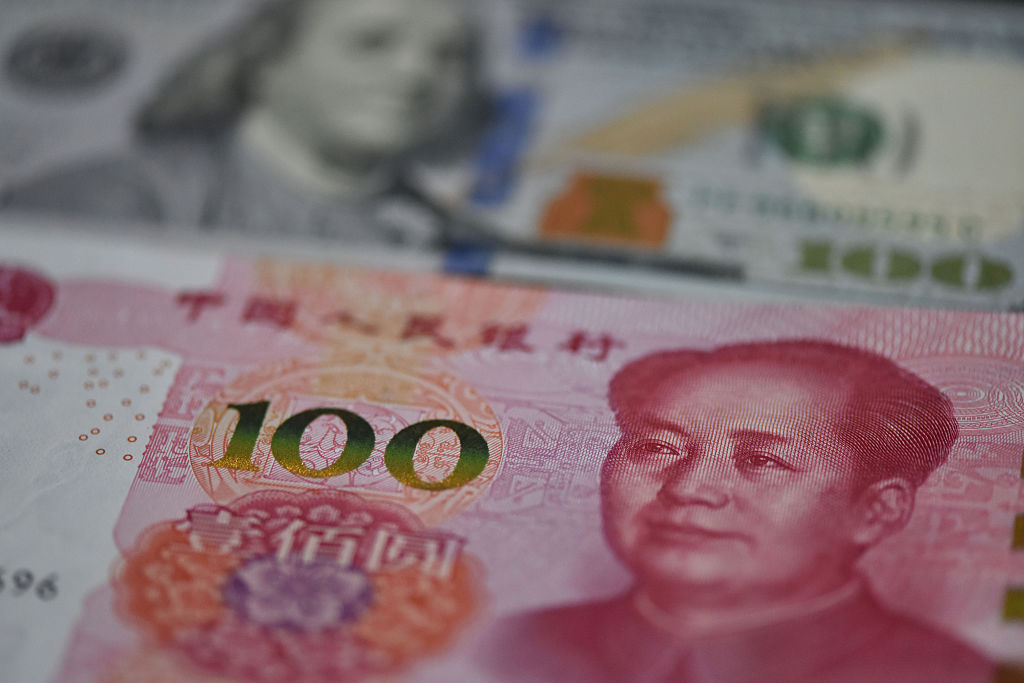
A carefully managed yuan allows Beijing to blunt the impact of U.S. tariffs.
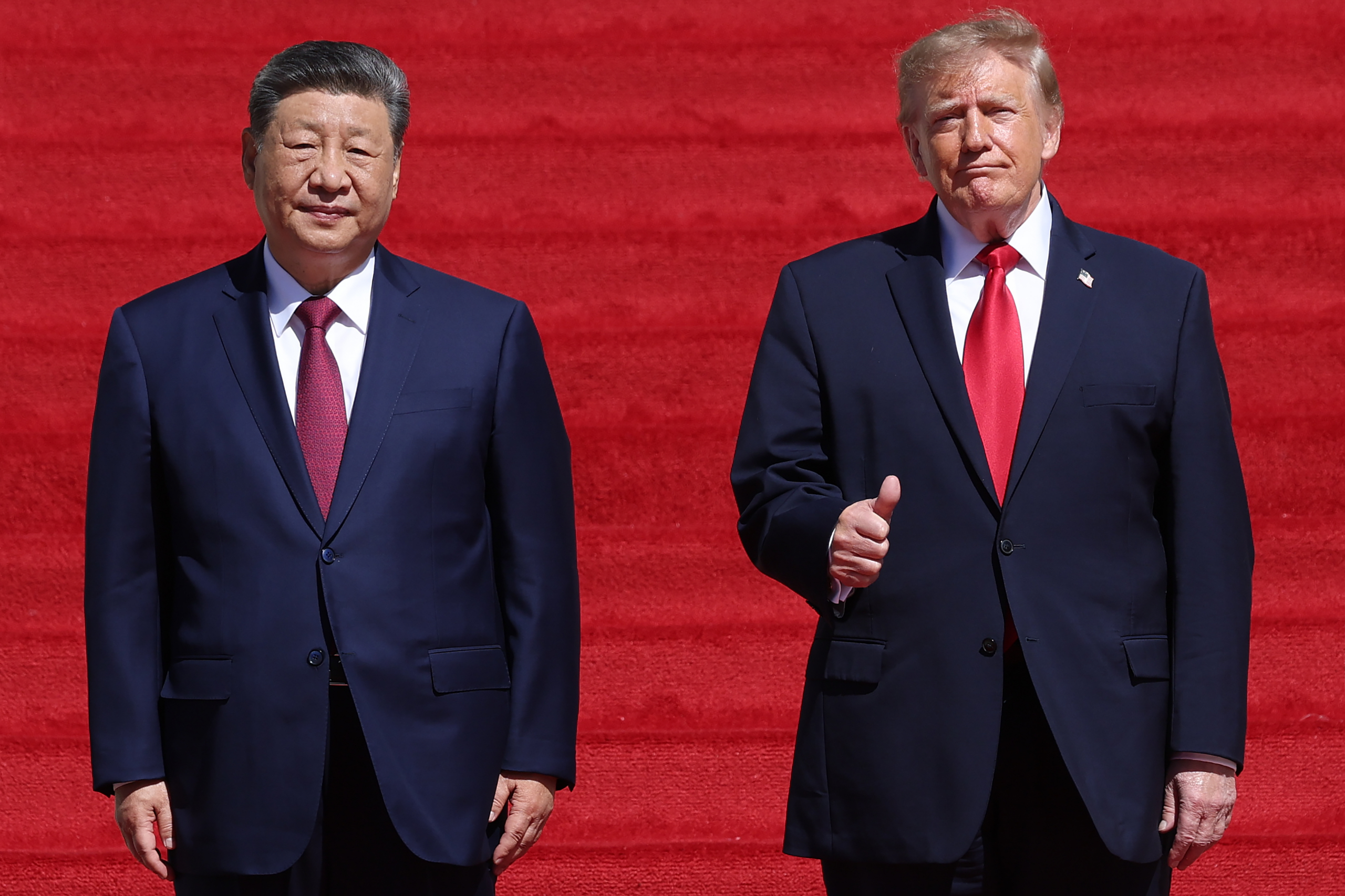
China’s leader Xi Jinping is due to visit Washington DC in September for a state visit with U.S. President Donald Trump. There are scores of issues the two could talk about during the choreographed diplomatic affair but, ahead of Xi’s arrival, the Alliance for American Manufacturing is taking a look at a handful of issues we hope are addressed. We’ve already discussed industrial overcapacity. Today’s topic: China’s currency manipulation.
Later this month, President Trump will meet with Chinese President Xi Jinping amid America’s ongoing efforts to push back against China’s unfair trade practices. One issue that deserves far more attention is China’s continued manipulation of its currency.
The United States is currently fighting back against decades of Beijing’s state-directed economic model that dumps excess production onto global markets and undermines American manufacturers and factory workers. Tariffs are an important part of that response, but they cannot achieve their intended effect if Beijing is allowed to offset them through exchange rate policy.
China’s currency is not freely determined by market forces. Beijing maintains unprecedented and extensive control over the yuan through daily exchange rate management, capital controls, and other mechanisms that allow the government to influence its value. China has repeatedly denied using these tools to gain a trade advantage, but the evidence is clear that Chinese authorities continue to suppress the yuan’s value in a manner that supports exports and counteracts the trade measures imposed under both President Trump and his predecessor.
Economist Brad Setser recently warned that Chinese state institutions “are now giving China’s exporters an artificial edge in foreign markets by holding China’s currency down.” He further observed that weak domestic demand and industrial subsidies, along with an undervalued depreciating currency, have helped drive China’s trade surplus to roughly triple since 2018.
China’s trade surplus reached a record $1.2 trillion in 2025, and it has already accumulated more than $805 billion in surplus during the first eight months of 2026. August alone produced a $119 billion surplus. Chinese exports grew 25% year-over-year in August, while shipments to the United States rose 34.4%. Auto exports increased 43%, and semiconductor exports surged nearly 130%.
The real issue is not whether the yuan rises or falls against the dollar over a few months, but rather whether Beijing is preventing the substantial appreciation that market fundamentals would otherwise produce.
Currency manipulation is uniquely damaging because it can blunt the effect of every major U.S. trade remedy simultaneously. Whether the United States imposes Section 301 tariffs, Section 232 measures, Section 201 safeguards, antidumping duties, or countervailing duties, a deliberately undervalued currency lowers the effective price of Chinese exports across the board. Currency devaluation offsets these duties, preserving an artificial competitive advantage for Chinese producers and undermining the effectiveness of U.S. trade enforcement.
Furthermore, these concerning trends hardly suggest an economy rebalancing toward domestic consumption. Instead, they reflect a system that continues to rely on foreign markets to absorb excess production generated by state subsidies, industrial planning, and chronic overcapacity.
Beijing’s defenders will undoubtedly point to charts of the USD/RMB exchange rate nominally showing that the yuan has strengthened over the last 18 months. But that data alone is misleading and misunderstands how China’s exchange rate system actually works. The yuan is not a freely floating currency like the dollar. Chinese authorities retain extensive control through daily currency fixings, capital controls, state-owned banks, and other mechanisms that allow the government to influence exchange-rate outcomes.
The real issue is not whether the yuan rises or falls against the dollar over a few months, but rather whether Beijing is preventing the substantial appreciation that market fundamentals would otherwise produce. China is generating record trade surpluses, exporting far more than it imports, and increasingly relying on foreign markets to absorb excess production generated by state subsidies and industrial overcapacity. In a genuinely market-based system, those conditions would place powerful upward pressure on the currency.
A stronger yuan, meanwhile, does not in any way clear Beijing of manipulation. Instead, it merely illustrates how carefully Beijing manages the currency, allowing limited appreciation when politically convenient while preventing the much larger adjustment that an unconstrained market would produce.
Dating back to the first Trump administration, China has demonstrated how currency depreciation blunts the impact of U.S. tariffs. When the United States imposed tariffs on roughly half of Chinese imports in 2018, the yuan subsequently fell by roughly 13% against the dollar, reducing the price increase faced by Chinese exporters and blunting the impact of U.S. trade enforcement. In August 2019, the U.S. Department of the Treasury Department formally designated China a currency manipulator, concluding that Beijing had acted to gain an unfair competitive advantage in international trade.
A stronger yuan merely illustrates how carefully Beijing manages the currency, allowing limited appreciation when politically convenient while preventing the much larger adjustment that an unconstrained market would produce.
But no actions have been taken by Congress or the Trump or Biden administrations to address this market manipulation. The administration possesses several tools that could be deployed more aggressively. Treasury can scrutinize intervention by state-owned banks and formally confront exchange-rate manipulation; the Office of the United States Trade Representative (USTR) can more aggressively incorporate currency practices into Section 301 enforcement efforts; and the U.S. Department of Commerce can pursue currency-related countervailing duty actions.
For its part, Congress should consider stronger remedies that automatically neutralize any trade advantage gained through deliberate currency undervaluation. Washington’s concern about China’s currency manipulation is hardly new. The Senate backed a Schumer-Graham currency proposal by a 67-33 vote in 2005, the House passed the Currency Reform for Fair Trade Act by 348-79 in 2010, and the Senate followed with a 63-35 vote for the Currency Exchange Rate Oversight Reform Act in 2011.
President Trump should make clear during his meeting with Xi that the United States will not permit China to devalue its way around American trade enforcement. Strategic tariffs, antidumping and countervailing duties, and other measures are intended to address China’s unfair trade practices and market distortions. If Beijing is allowed to erase those measures through currency manipulation, American workers and manufacturers will once again find themselves competing against an artificial advantage created not by markets, but by the Chinese state.