African Development Bank Funds Low-Carbon Cement Complex
The Board of Directors of the African Development Bank Group has approved €20 million in financing for Ciments écologiques de Côte d’Ivoire (CIMECI), a YESHI Group company, to develop a low-carbon cement complex in Attingué, north of Abidjan. The planned facility will include a calcined-clay production plant with an annual capacity of approximately 350,000 tonnes […] The post African Development Bank Funds Low-Carbon Cement Complex appeared first on World Construction Today.
 machineryasia
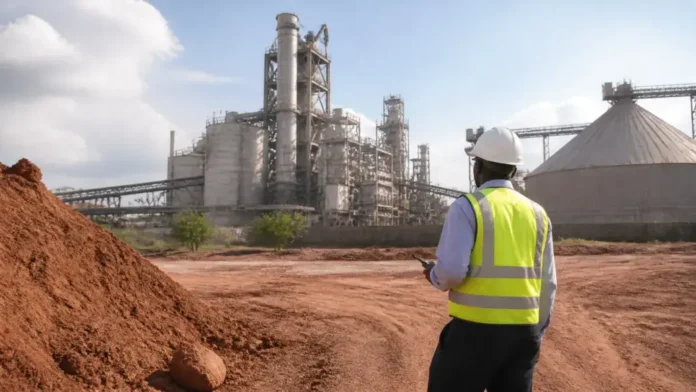
The Board of Directors of the African Development Bank Group has approved €20 million in financing for Ciments écologiques de Côte d’Ivoire (CIMECI), a YESHI Group company, to develop a low-carbon cement complex in Attingué, north of Abidjan.
The planned facility will include a calcined-clay production plant with an annual capacity of approximately 350,000 tonnes and a grinding plant capable of producing up to 500,000 tonnes of cement annually. The project will use locally sourced clay and limestone to manufacture limestone calcined clay cement (LC3), which replaces part of the clinker used in conventional cement production.
The use of these materials is expected to reduce the carbon footprint of cement manufacturing while lowering Côte d’Ivoire’s reliance on imported clinker.
Solomon Quaynor, Vice President for Private Sector, Infrastructure and Industrialisation at the African Development Bank Group, said, “Côte d’Ivoire’s demand for construction materials is growing, but expanding production need not perpetuate carbon-intensive manufacturing. The project demonstrates how locally available raw materials, private capital and lower-carbon technology can work together to strengthen domestic industry.”
He said the investment reflects the Bank’s ambition to mobilise private capital for green industrialisation and climate-resilient infrastructure, while transforming local resources into competitive, lower-carbon manufactured products and strengthening value chains.
Local Raw Materials to Support Cement Production
Most cement produced in Côte d’Ivoire relies on imported clinker. The project will use locally sourced clay to retain more value within the Ivorian economy, reduce exposure to supply-chain disruptions and develop local technical expertise.
The facility is intended to serve the domestic market, where demand for construction materials is driven by housing, commercial construction and infrastructure development. Its production model is also expected to strengthen local industrial capacity and improve the availability of lower-carbon cement.
Khalid Iben Khayat, Managing Director, Industry Division, YESHI Group, said, “The technology will significantly reduce CO₂ emissions from cement production compared with those of traditional, clinker-intensive cement. Through this project, we aim to transform a locally available resource into a construction material produced in Côte d’Ivoire. Our ambition is to strengthen national industrial capacity, develop local technical expertise, and secure supplies for the Ivorian market, while reducing dependence on imported clinker.”
Project Aligns with Green Industrialisation Strategy
The financing supports the African Development Bank Group’s Ten-Year Strategy 2024–2033, which focuses on green industrialisation and private-sector development.
It also aligns with Côte d’Ivoire’s efforts to expand domestic manufacturing, strengthen industrial supply chains and increase the availability of lower-carbon construction materials. Through the low-carbon cement complex, the project aims to combine locally available resources and lower-carbon production technology to support the country’s cement industry.
The post African Development Bank Funds Low-Carbon Cement Complex appeared first on World Construction Today.