2026 Executive Outlook: Scott Young, Head of Region North America, Volvo Construction Equipment
Young details his outlook for 2026, from infrastructure demand to electrification, automation and new equipment launches.
 machineryasia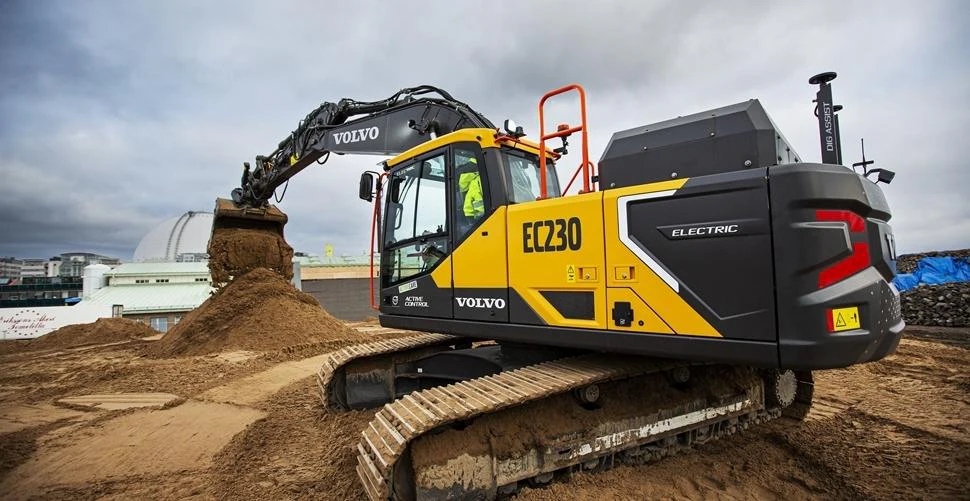
As construction equipment executives look ahead to 2026, they are navigating a landscape shaped by persistent economic pressures and targeted pockets of strength.
Tariffs, high interest rates and inflation may cause contractors to delay big purchases and increase equipment rentals to reduce near-term risk. At the same time, the data center and energy infrastructure demand tied to the AI boom is fueling growth in many regions throughout the country.
For this series of Q&As, Equipment World tapped more than a dozen construction industry leaders to find out what trends are shaping their strategy in 2026, how they plan to invest in their manufacturing and dealer operations and how the current political climate is impacting their product roadmap – from regulatory changes to supply chain constraints.
Our slate of experts also touched on technology – from telematics to automation – and the next steps in their alternative power transformation.
This year’s participants include:
Scott Young, Head of Region North America, Volvo CE
Keep reading to see where Scott Young, Head of Region North America for Volvo CE, is placing his bets.
 Volvo CE
It’s no secret that the entire industry is facing some economic headwinds entering 2026, but I'm really excited for what’s ahead for Volvo CE globally and specifically in North America. Over the past year and half, we’ve had our biggest launch period ever, including the introduction of new excavator, articulated dump truck and wheel loader series, all designed to enhance customer uptime, productivity and safety. That has given us a lot of momentum heading into the new year.
Early in 2026 we have CONEXPO, where we will showcase these new-gen models and services like our site solutions, Assist machine control technology and ActiveCare Direct advanced telematics system. And we’ll introduce even more new products before and at CONEXPO.
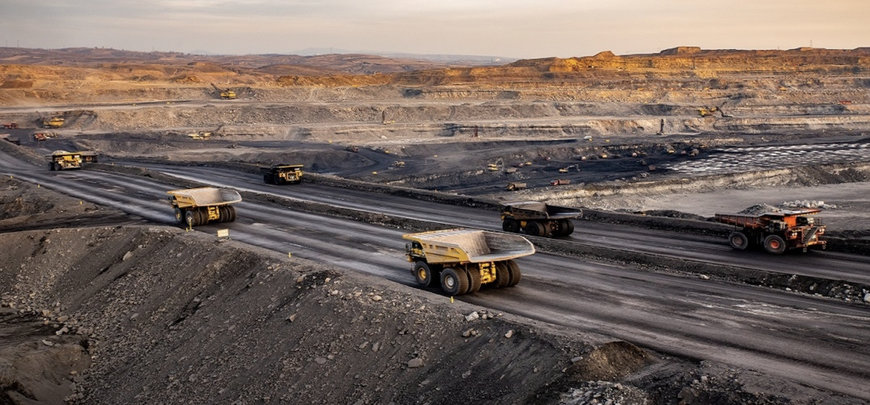
In terms of market segments, in 2026 I’m expecting strong demand from quarry/aggregate and mining operations, as well as infrastructure development related to energy and data center projects.
EW: How are customer requests and feedback shaping the types of equipment or attachments you plan to release next year?
They always play a central role. I frequently travel across North America visiting customers, and when I ask them what they need from Volvo and our dealers, they always mention uptime, total cost of ownership, safety and expert consultation. Another big one is simplicity — in machine operation and maintenance but also in doing business with us.
All of this feedback has informed the new-gen models I mentioned above and the machines we will introduce in 2026. For example, our new excavators, wheel loaders and ADTs include improved fuel efficiency, enhanced safety features, simpler maintenance and a redesigned cab. Another example of innovation is our new mid-size electric wheel loader, the L120 Electric.
The same is true for the technology that helps our customers work smarter. For example, our Connected Map service lets customers see the location of all machines on their site, no matter the brand, and gives them actionable data to optimize traffic flow, enhance safety and productivity.
EW: What role will emerging technologies — automation, electrification, AI, telematics, etc. — play in your R&D and product launches?
These are all among the biggest shifts happening in our industry. Customers are making business and jobsite decisions based on data provided by telematics, machine control systems and site management tools. We consider these services as important as the machine, and they are integrated in our R&D process.
With electrification, Volvo is the industry leader with the largest lineup of electric heavy equipment at eight models. We continue to innovate in this area, including adding larger machines with our 23-ton excavator (EC230) and mid-size wheel loader (L120).
Autonomous operations, reliable connectivity and remote software download are increasingly important. These technologies must be integrated, as automation relies on robust connectivity and data. Also, automation does not have to be full-machine automation. Any capabilities we can support that improve efficiencies and that move a good operator to a great operator are welcomed by our customers.
EW: What’s your outlook on hiring and retaining skilled manufacturing talent in the year ahead?
We have a great opportunity to help our customers while also supporting job growth in our region with the expansion of our production facility in Shippensburg, Pennsylvania. In 2026, we will add crawler excavators and large wheel loaders to the production line. Currently, soil and asphalt compactors and mid-size wheel loaders are manufactured at the factory.
EW: How are you working with your dealer network to ensure availability, service and customer support?
Volvo CE and our dealers work in lockstep to support our customers. It starts with ensuring that our dealers have the products, parts, service and support from us that they need to serve customers. We also share best practices across our network so that we are all learning from each other and, ultimately, enhancing every customer’s experience.
A point of emphasis has been meeting customers where they are in their journey. Our customers are coming into the buy/rent/lease process with more information than ever before, and they want answers to their specific questions. They want the process to unfold on their timeline. And they want to talk on their terms be it in person, online, over the phone or whatever else. We’re hyper focused on innovating to give customers personalized information, convenient access and a consistent experience no matter how they engage with us.
EW: How are evolving emissions regulations and customer sustainability goals
influencing your product development?
It’s more of a winding road than a straight one, but we continue to see forward movement toward a lower-carbon future. As mentioned, Volvo CE is leading the way in developing electric construction equipment. We also have hybrid models, and a big point of emphasis with our internal combustion engine machines is to reduce fuel consumption. The future will include a variety of power sources, not one solution, and we will continue to develop a diverse product lineup that lets our customers choose the right fleet mix for their needs.
EW: Where do you see the biggest competitive pressure coming from: Established OEMs, new entrants or technology companies?
It’s fair to say all the above. Our eye is always on other leading OEMs. We have a lot of respect for and healthy competition with them. In recent years, there also have been new entrants coming from overseas. Our focus is on quality at a competitive price point and low TCO, and our customers understand the value in that.
And with construction and mining becoming increasingly high tech and data driven, we have emphasized developing services that help customers work smarter. That sometimes puts us in competition with different companies than in the past.
EW: Looking beyond the next year, what’s your outlook for the global equipment market over the next 3–5 years?
Taking a step back and looking at the bigger picture shows that there’s a lot to be optimistic about. Key growth drivers globally include infrastructure development, urbanization and advancements in technology and how machines are powered (battery electric, hybrid, hydrogen, for example).
Volvo CE has continued to strengthen our position by making a number of strategic moves, including expanding our crawler excavator footprint with investment in three main production sites: North America, South Korea and Sweden.
We’re also leading by partnering with our dealers and customers to develop solutions that help them adapt to changing market conditions, regulatory requirements and disruptions. For our customers, addressing these issues present opportunities for growth. The three big ways we’re helping them are:
- Providing reliability and uptime with our machines and services.
- Making it easy to do business with Volvo CE and our dealers, including parts service and support. As I mentioned above, this also includes simplicity in machine operation. Customers want advanced capabilities without increased complexity.
- Innovating around automation, connectivity and integration as our industry continues to evolve with both on-machine technology and the use of data.
Scott Young has served as Head of Region North America for Volvo Construction Equipment since September 2023, based out of the company’s Shippensburg, Pennsylvania, headquarters.
Scott has been in the construction equipment industry for more than 23 years, including at Ingersoll Rand and Volvo CE. His experience includes distribution, sales, engineering and uptime support as well as his extensive network in the Volvo Group globally and the North American dealer network.
In his previous role, Scott served as Head of Uptime, where he led teams in implementing new technologies and business models focused on services and product support, in partnership with the Volvo CE dealer network.
From 2014 to 2019, Scott was based in Belgium and Sweden with responsibility for the company’s emerging electromobility and automation strategies and new product development. He began his Volvo Group career in 2008, and previous roles include Director of Strategy and District Business Manager.
He holds a degree in civil engineering from the South Dakota School of Mines and Technology and an Executive MBA from the University of Illinois Urbana-Champaign.