2025: The Year of the Tariff
They've redefined the economic landscape, and uncertainty still looms.
 machineryasia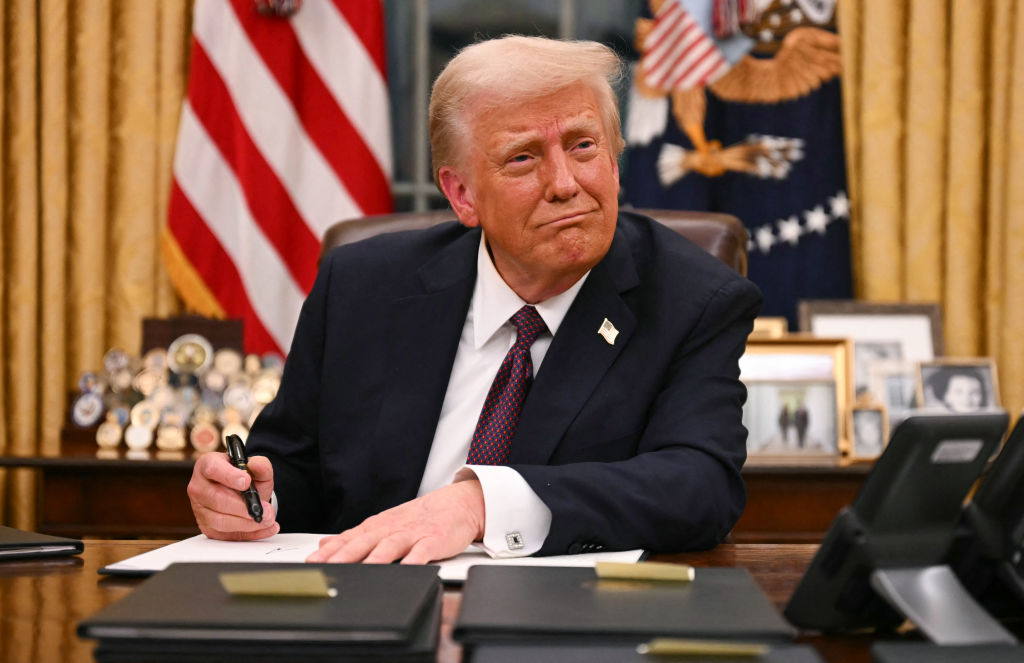
They’ve redefined the economic landscape, and uncertainty still looms.
If history remembers 2025 for one defining economic trend, it will be tariffs. Throughout the 2024 presidential campaign, Donald Trump frequently said he would impose new tariffs on China and reciprocal tariffs on the rest of the world. Some took it as campaign rhetoric to attract blue-collar votes.
And when the President did not impose tariffs on his Inauguration Day, as many believed he would, the skepticism over whether he would follow through only grew. Trump instead signed an executive memo that put into motion more than 20 reports and investigations related to unfair trade practices and procurement. We covered it here and noted that it would set the stage for some potentially major changes in early April. (Nailed that one!)
However, as he often does, Trump surprised a lot of folks by going ahead and imposing tariffs less than two weeks after he was sworn in. The first salvo came in February, when Trump announced tariffs on China, Mexico and Canada. He announced he would strengthen the Section 232 tariffs on steel and aluminum. And that was the starting gun on what became almost weekly news on tariffs for weeks to come. I’m not going to cover every change here — we’d run out of room — but suffice it to say as I’m writing this in December, I can predict with near certainty that the changes (whether directed by Trump or possibly the Supreme Court of the United States) will still be rolling in next year.
While there was plenty of criticism directed at Trump for the tariffs, I could see the strategic imperative of the China and steel tariffs and took to the national debate stage to defend them. Elite public and economist opinion was decidedly against me, of course.
Perhaps the most consequential trade policy day of 2025 was April 2, dubbed “Liberation Day” by President Trump. The administration announced sweeping tariffs covering nearly all countries and a vast array of products. The scale was unprecedented in the post-World War II era. Stock indexes tumbled, prompting the administration to tweak certain tariff levels in the weeks that followed. Still, the message was unmistakable: Tariffs were no longer a tactical instrument — they were the centerpiece of U.S. trade policy.
As tariffs multiplied, so did legal challenges. Importers filed lawsuits contesting the administration’s authority, particularly under the International Economic Emergency Powers Act (IEEPA). While steel and aluminum tariffs imposed under Section 232 were widely accepted as legitimate, reciprocal tariffs under IEEPA sparked fierce debate in Congress and the courts. At issue was whether the executive branch could wield tariff power so broadly without legislative approval. Many predicted the Supreme Court would ultimately strike down portions of the policy, especially those seen as revenue-generating measures rather than national security safeguards. I’m not a constitutional lawyer, but I do see the trade deficit as a national emergency, and I made the case in this piece.
As 2025 draws to a close, one thing is clear: Tariffs have redefined the economic landscape. Businesses are adapting, exploring “friend-shoring” and reshoring strategies while diversifying supply chains to mitigate risk. Yet uncertainty still looms. Will courts curtail executive tariff authority? (We’ll know soon.) Will Congress assert greater control? (Unlikely, given that Republicans have given Trump a wide berth.) And how will global partners respond as trade barriers harden? (Reluctant truces with higher U.S. tariffs seem to be the norm.)
We may have already hit “peak tariff” and could see some leveling off as trade partners seek to reach favorable agreement with the Trump administration, offering investments in the U.S. to lower tariff rates. With respect to China, it seems clear (at least at this point) that the administration seeks stability and some level of de-risking. That’s well short of an economic decoupling and exclusionary tariff rates.
There is an ongoing, vigorous debate about the efficacy and effects of tariffs, but the data to this point is decidedly boring and unresolved. Inflation hasn’t spiraled out of control, but we also haven’t seen a factory jobs boom. I’m optimistic about the factory outlook for 2026, as we have seen significant interest and announcements for new factory construction. But the tariffs aren’t happening in a vacuum, and other factors — interest rates, global economic performance, energy costs, etc. — could hinder or accelerate a new manufacturing boom.
(NOTE: Cat Adams and I discuss the Year of the Tariff on the Manufacturing Report Podcast, complete with great audio of the key events, available December 29 on YouTube, Apple Podcasts and Spotify.)