2001 CAT 836G to Achieve Reduced Operating Costs
For high-output landfill operations, fleet managers prioritize controlling daily expenses. They rely on field-tested, durable old models of heavy machinery. Indeed, the daily fuel consumption, unexpected repairs, and downtime impact the productivity and profit margins. Here is the selection of a cost-effective 2001 CAT 836 G to achieve reduced operational […] The post 2001 CAT 836G to Achieve Reduced Operating Costs appeared first on Used Equipment.
 machineryasia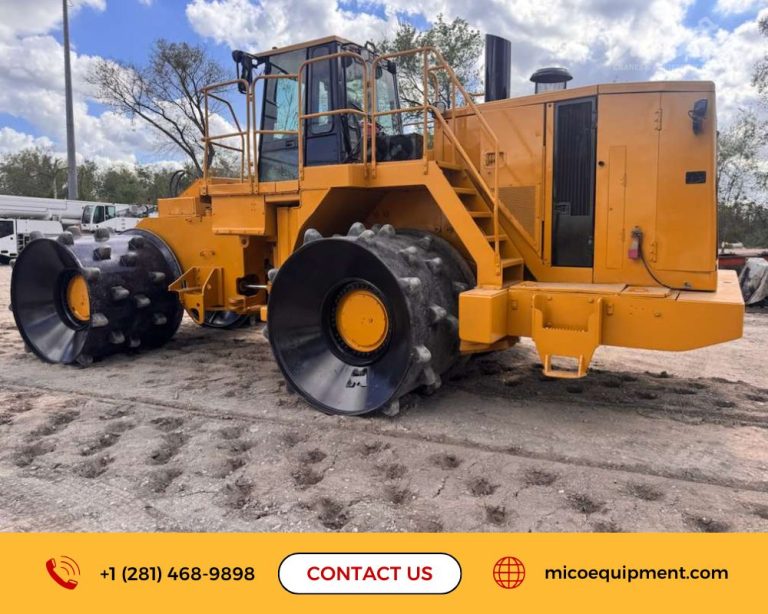
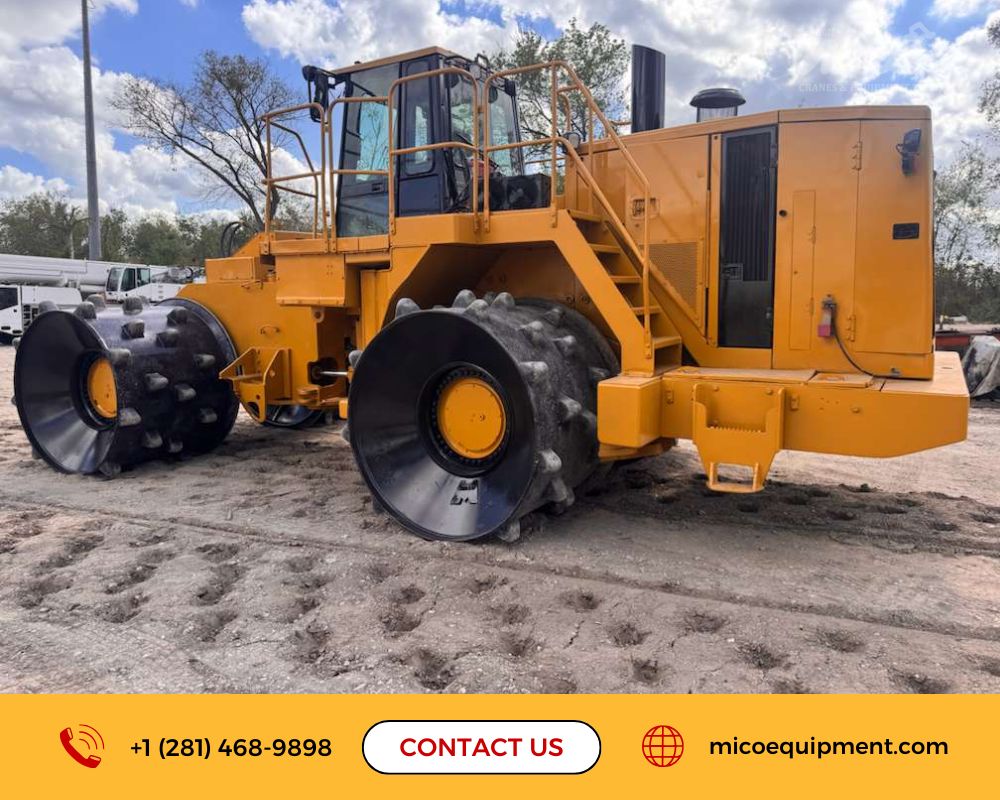
For high-output landfill operations, fleet managers prioritize controlling daily expenses. They rely on field-tested, durable old models of heavy machinery. Indeed, the daily fuel consumption, unexpected repairs, and downtime impact the productivity and profit margins. Here is the selection of a cost-effective 2001 CAT 836 G to achieve reduced operational costs.
This landfill compactor is the world’s trusted model for durability, simple electronics, easy maintenance, and reliable performance. Contact Mico Cranes and Equipment in TX to purchase a well-maintained CAT 836G for lower per-hour compaction costs. It is designed for consistent results and predictable daily expenses, not complexity.
What Makes Operating Costs Important in Landfills?
Waste management facilities are among the most challenging working conditions, where each hour spent operating a machine can make or break the project’s success. Three major contributors trigger the section of landfill compactors.
1. Daily Fuel Consumption
In landfill cell compaction, machines must operate continuously for 8 to 12 hours per day in debris-filled environments. Hundreds of gallons of diesel are consumed per shift, which is the most significant daily expense. Experts prefer compactors that deliver precise results even in a single pass to control operational costs.
2. Machine Repair Frequency
The next focus is on the continuous compactions; even a one-hour break due to unscheduled repair impacts the entire budget. The downtime results in increased labor costs due to extended working hours and the costly repairing of faulty machines.
3. Maintenance Replacements
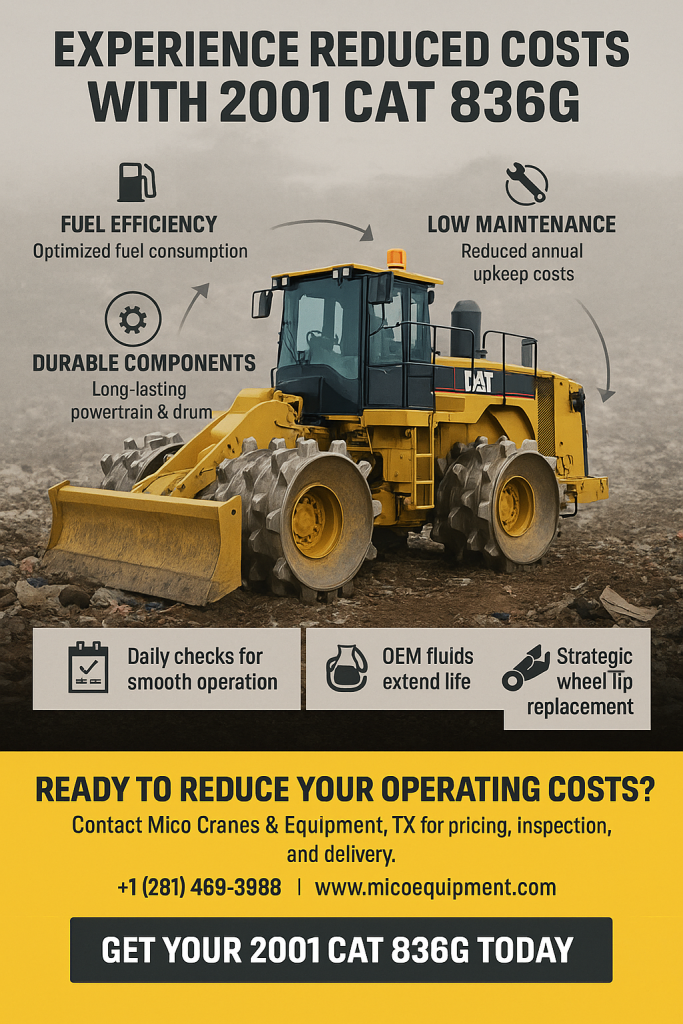
The reliability and ease of servicing the machines help prevent unnecessary expenses. The 2001 CAT 836 G landfill compactor for sale requires minimal maintenance to deliver maximum ROI and less lifecycle cost than high-tech machines.
Landfill operators invest in a CAT 836 G compactor to control daily expenses and unexpected repairs, maximizing output while minimizing financial risk.
Overview of the 2001 CAT 836G
Caterpillar designs this landfill compactor with specialized features to withstand extended compaction hours in harsh conditions. It’s a powerful engine, and the transmission systems enable pushing and compressing dense waste layers without excessive fuel burn. Highly responsive hydraulics deliver consistent results, and a reliable cooling system manages overheating concerns.
| Features | Specifications | Reduced Expenses |
| CAT 3456 Engine | 425 HP and high torque | At low RPM, generate high torque and consume less diesel for heavy-duty compaction. |
| Heavy Operating Weight | 115,000–124,000 lbs | Better compaction in fewer passes and burns less fuel. |
| Hydraulic System | Precise pressure flow with Load sensing. | Accurate use of power to perform reliable results without burdening the engine. |
| Durable Powertrain | Planetary power shift transmission with torque converter and electronic clutch pressure. | A reliable drivetrain with fewer parts, less wear, and lower replacement costs. |
| Cooling System | High-capacity radiator with reverse fan technology. | Prevents overheating even in dusty conditions |
| Structural Durability | Welded steel with a box-section frame | Mechanical stress-resistant chassis for long service life. |
| Wheel Tip | Replaceable with job site conditions. | Provides better grip and compaction in a single pass while controlling fuel costs. |
| Fuel Tank | 209 gallons | Less need for refills in one shift, control idle time. |
| Simple Maintenance | Modular structure with easy access to service points. | Easy maintenance, high uptime, and less labor involvement. |
CAT 836G truly shines for its durability and easy repair with genuine spare parts to perform the same functions as brand-new models. This fact makes its purchase more secure with long-lasting returns. After a significant CAT-certified rebuild, it extended its service life by 8 to 12 years. Its simple electronic system reduces the downtime and costly replacements.
Key Ways the 2001 CAT 836G Reduces Operating Costs
CAT G-series landfill compactors are large, reliable machines that deliver high performance at the lowest operating costs. It is engineered to provide consistent efficiency, long-term durability, and simplicity. These features are essential for handling heavy-duty operations at waste-dumping sites under corrosive conditions. Stay with us to understand how you will control daily operational expenses with the 2001 CAT 836G:
1. Lower Fuel Consumption
CAT equipped this compactor with a highly fuel-efficient CAT 3456 engine. It is a reliable support system to generate high torque at low RPMs. The operators can effectively densify heavy debris and waste without putting pressure on the engine. It will result in optimal fuel burning and fewer chances of engine malfunctioning.
In new compactor models, DEF is required for complex Tier 4 systems that require frequent filter replacements and overhauls. On the other hand, the simple 2001 CAT 836G requires minimal maintenance and does not compromise compaction quality. It means all energy is used for compaction without managing complex functionality.
Landfill fleet managers claim 836G delivers economical operations and manages their expenses at the lowest cost-per-ton compaction, rather than regeneration-related delays.
2. Reduced Maintenance Costs
Maintenance is one of the highest costs that affect the project’s overall budget. It increases the machine’s total cost of ownership and is a financial constraint for high-yielding landfill sites. CAT introduces this purpose-built compactor with minimal upkeeping requirements. Moreover, the easy-access service points enable the in-house team to switch between fluid and routine servicing effortlessly.
In debris-rich, high-heat, and uneven landfill terrain, the smart sensors of new compactor models get choked, whereas the 836G outperforms. The simple electronics don’t require frequent servicing and replacements to keep expenses under control.
Additionally, the compaction wheels and tips are crafted from reinforced steel to withstand mechanical stress without affecting compactor performance.
On-site staff at waste recycling facilities validated that CAT 836G requires fewer parts replacements than competing models, reducing overall machine expenses.
3. Longer Component Life and High Rebuild Value
The top appeal of purchasing a previously owned CAT landfill compactor is its durable, modular structure and reliable components. The manufacturer designs the G-series for long service life and easy rebuilding of major systems. Mico Cranes and Equipment, TX, provides you with 836G with a CAT-certified engine, transmission, and hydraulics rebuilt. Now it can deliver reliable compaction results without risk of costly repairs and downtime.
Caterpillar provides its users with easy access to genuine parts and professional assistance, which keeps its second-hand products in high demand. After upgrades, these machines are in near-new condition at a fraction of replacement cost.
4. Superior Compaction Efficiency
Compaction efficiency is crucial to increasing landfill capacity and providing more space for waste dumping. The 2001 CAT 836G compactor delivers superior waste material compression even in a single pass. It reduces the need for rework and unnecessary fuel consumption. You will have:
- Less Operational Cost: Wise utilization of the machine delivers satisfactory results in a few hours of work and controls fuel consumption.
- Reduced Mechanical Stress: When the compactor is smartly used without overburdening its engine, chassis, and powertrain system, there is less risk for malfunctioning and extra stress.
Better landfill cell density reduces air voids, reduces the trapping of released gases, and reduces the occupational hazards of fire and injuries. Thus, reliable performing machines control job site safety and reduce financial losses.
5. Lower Depreciation vs New Machines
Depreciation plays a significant role in the purchase of heavy-duty machinery. To upgrade your fleet with durable and economical choices, the used equipment for sale market is the best option. The old models have already experienced a sharp depreciation curve and now have a static, value-retaining market price.
The CAT landfill compactor is highly sought after for its budget-friendly operations and low repair costs. This factor enables the private or small-scale waste management companies to improve their operational fleet at an affordable expense.
Real-World Comparison: 2001 CAT 836G vs Newer Compactors
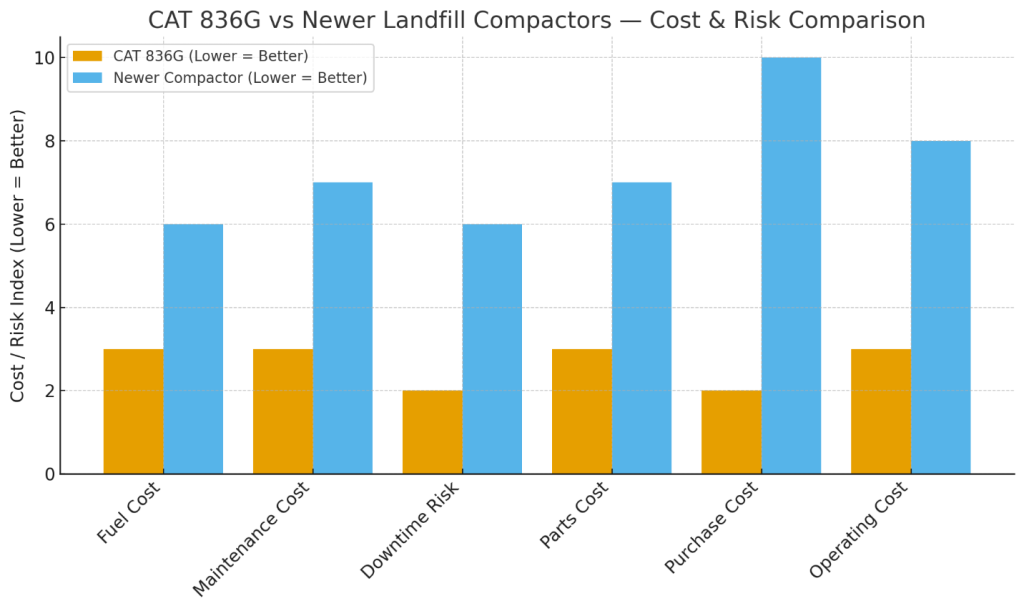
When evaluating market-available options for CAT 836G landfill compactors. After compaction performance, the second main measuring factor is the cost of ownership. The 2001 CAT 836G consistently outperforms with the least maintenance and operational expenses. Here, we outline the critical parameters for landfill compactors and their comparison.
2001 CAT 836G vs Newer Landfill Compactors
| Features | 2001 CAT 836G | New Compactor Models |
| Initial Cost | Available at ¼ the cost of a fresh model with similar specifications. | $900,000+ starting price |
| Fuel Utilization | Simple structure for optimal torque; no need for regen cycles, which involve less diesel. | Emission control and regen cycles consume more fuel. |
| Maintenance | No smart sensors, cheap replacement parts, and modular design. | Complicated electronics and digital diagnostics systems require specialized repairs. |
| Lifespan | Proven reliability with more than 10,000–20,000 hours of lifespan. | Varied times and a higher risk of malfunctioning. |
| Rebuild Value | Designed for simple, affordable upgrades in accordance with CAT-certified protocols. | Expensive rebuilds from special personnel. |
| Risk Factors | The simplest systems with minimal electronics and less risk of failures | Smart sensors, controllers, and software are more prone to errors. |
| Parts Availability | Strong CAT customers are supported with spare parts. | Expensive replacement parts. |
| Compaction Results | Outstanding output with fewer expenses | High operational cost for precise results. |
| Operating Cost | No surprises and budget-friendly | Much higher cost and maintenance. |
| Best For | High productivity at low expenses | Those who prefer new technology and emission standards. |
This 836G offers lower fuel consumption, affordable repairs, and a high performance-to-cost ratio. It is an economical and secure option compared to newer models that struggle in harsh real-world conditions.
Expert insights reveal that:
- If the 2001 CAT 836G is handled with care and maintained regularly, it can perform for more than 20 years.
- Real-world surveys indicate that fleet managers achieve high-density landfill compaction with minimal daily expense and risk of downtime.
Well, if you can achieve reliable results with affordable machines. Why invest in new units with hefty price tags and costly maintenance? Think about it.
How to Maximize Cost Savings with a 2001 CAT 836G
Indeed, the safe handling and proactive maintenance are smart moves to keep your high-yielding machines in good working order. Follow these instructions for Maximizing ROI:
- Daily Checks: Before and after each shift, thoroughly clean the compactor and inspect its wheel and fluid levels to prevent costly downtime.
- Operator Training: Always hire experienced and skilled operators to extract maximum output without impacting the machine’s well-being.
- Using OEM Fluids: Use CAT-recommended quality of fluids and lubricants to improve compactor efficiency.
- Scheduled Overhaul Timing: Plan proactive measures and follow the CAT-suggested time intervals for major component overhauls.
- Wheel Tip Replacement: To prevent compaction drum damage, replace wheel tips according to job site conditions.
Used CAT 836G for Sale Near Me
The 2001 CAT 836G is the top choice for budget-friendly machines for landfill operations. It is the professional’s most trusted design for simple maintenance and proven performance. Contact Mico Cranes and Equipment in TX for a transparent purchase of used heavy machinery for sale in Houston.
FAQs
Q 1. How many hours are red flags for the used CAT 836G for sale?
In fact, the well-maintained CAT compactor can outperform even after 12,000–15,000 hours of continuous operation. However, the actual condition is not judged with the hours meter reading; inspect the crucial parts of 836g to secure your investment.
Q 2. What are the average annual maintenance costs for landfill compactors?
The average range is from $8,000–$15,000. It may vary with the job site conditions and operator handling practices. If the compactor is used wisely, its maintenance costs will be lower with longer service intervals.
Q 3. Is a CAT-certified major rebuilding trustworthy?
Yes. Always purchase a previously used landfill compactor that has been refurbished or rebuilt, backed by CAT-approved methods and genuine spare parts. After a specific time, each machine needs major rebuilds of the engine, transmission, hydraulic, and powertrain systems.
Q 4. What should I inspect in the used 2001 CAT 836G before purchasing?
Inspect the physical condition of the chassis, wheel tips, and underbelly pan. Verify the accuracy of the engine, hydraulics, and transmission system. It’s a more secure option to request its previous maintenance logs to evaluate hidden issues.
The post 2001 CAT 836G to Achieve Reduced Operating Costs appeared first on Used Equipment.