World-Record Bridge Construction Utilizing Topless Cranes In China
Manitowoc is supplying high-capacity lifting equipment to construct a mixed-traffic cable-stayed bridge across the Yangtze River for high-speed rail networks. www.manitowoc.com Equipment provider Chongqing Haohai Construction Equipment is utilizing high-capacity tower cranes manufactured by Manitowoc to execute heavy civil engineering operations. The equipment is deployed for the construction of the Shituo Yangtze River Bridge, a complex mixed-traffic railway structure located in Chongqing. Structural Challenges in High-Altitude Bridge Construction The Shituo Yangtze River Bridge project requires the erection of a 253-meter-tall south tower to support what is engineered to be a long-span road-rail cable-stayed bridge with a split main span. Structural execution demands lifting heavy steel reinforcement, formwork, and large prefabricated components at extreme elevations, operating up to 285 meters above the river level. Environmental factors, specifically wind speeds reaching 20 meters per second, complicate high-altitude material handling. This environment necessitates specialized hoisting equipment capable of maintaining load stability, resisting wind loads, and adhering to a strict 30-month construction schedule. Topless Crane Specifications and Load Capacities To meet these operational parameters, the site utilizes two Potain MCT 560 M25 topless tower cranes. The topless design eliminates the cat-head and tie-bars, reducing overhead clearance requirements and minimizing spatial interference when multiple cranes operate in close proximity. Each unit features a maximum lifting capacity of 25 tonnes and maintains a 4-tonne lifting capacity at the tip of its 80-meter jib. The systems integrate specialized climbing mechanisms engineered for high-altitude operations, enabling the mast sections to elevate seamlessly alongside the bridge tower's vertical progression beyond 200 meters. Throughout the deployment, the manufacturer provides continuous technical maintenance and spare parts integration through its regional support network to ensure operational continuity. Deployment in Heavy Civil Engineering The cranes are actively managing material placement for the bridge's twin-connected tower structure and split main-beam configuration. The primary technical use case involves the repetitive, high-load positioning of structural steel and concrete forms. The physical rigidity of the cranes ensures precise material placement despite challenging aerodynamic conditions, directly supporting process stability and site safety. "We believed that the cranes would be particularly well suited to the Shituo Yangtze River Bridge because of their high working height and their ability to continue climbing beyond 200 m," stated Jin Zhongxue, general manager at Chongqing Haohai Construction Equipment. The deployment of these high-capacity lifting systems facilitates the ongoing execution of the bridge structure, which will carry both road and high-speed rail traffic upon its scheduled completion at the end of 2026. Edited by Aishwarya Mambet, Induportals Editor, with AI assistance. www.manitowoc.com Powered by Induportals Media Publishing
 machineryasia
Manitowoc is supplying high-capacity lifting equipment to construct a mixed-traffic cable-stayed bridge across the Yangtze River for high-speed rail networks.
www.manitowoc.com
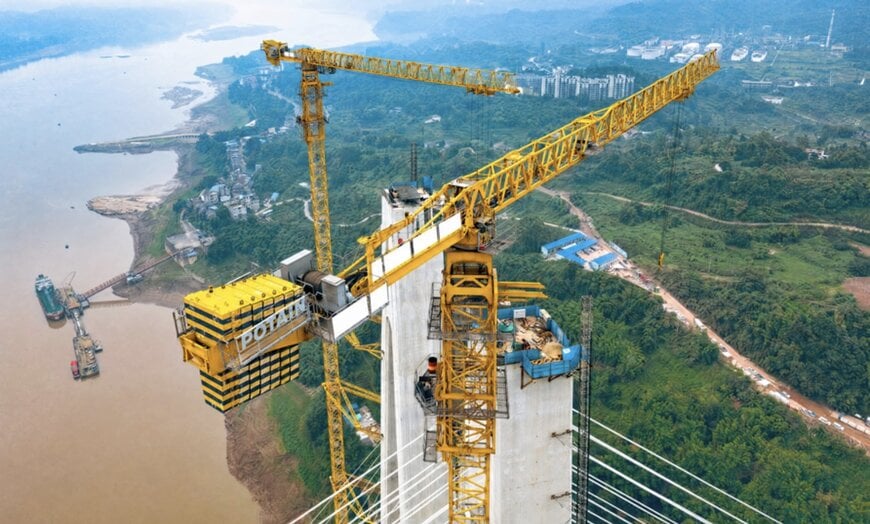
Equipment provider Chongqing Haohai Construction Equipment is utilizing high-capacity tower cranes manufactured by Manitowoc to execute heavy civil engineering operations. The equipment is deployed for the construction of the Shituo Yangtze River Bridge, a complex mixed-traffic railway structure located in Chongqing.
Structural Challenges in High-Altitude Bridge Construction
The Shituo Yangtze River Bridge project requires the erection of a 253-meter-tall south tower to support what is engineered to be a long-span road-rail cable-stayed bridge with a split main span. Structural execution demands lifting heavy steel reinforcement, formwork, and large prefabricated components at extreme elevations, operating up to 285 meters above the river level. Environmental factors, specifically wind speeds reaching 20 meters per second, complicate high-altitude material handling. This environment necessitates specialized hoisting equipment capable of maintaining load stability, resisting wind loads, and adhering to a strict 30-month construction schedule.
Topless Crane Specifications and Load Capacities
To meet these operational parameters, the site utilizes two Potain MCT 560 M25 topless tower cranes. The topless design eliminates the cat-head and tie-bars, reducing overhead clearance requirements and minimizing spatial interference when multiple cranes operate in close proximity.
Each unit features a maximum lifting capacity of 25 tonnes and maintains a 4-tonne lifting capacity at the tip of its 80-meter jib. The systems integrate specialized climbing mechanisms engineered for high-altitude operations, enabling the mast sections to elevate seamlessly alongside the bridge tower's vertical progression beyond 200 meters. Throughout the deployment, the manufacturer provides continuous technical maintenance and spare parts integration through its regional support network to ensure operational continuity.
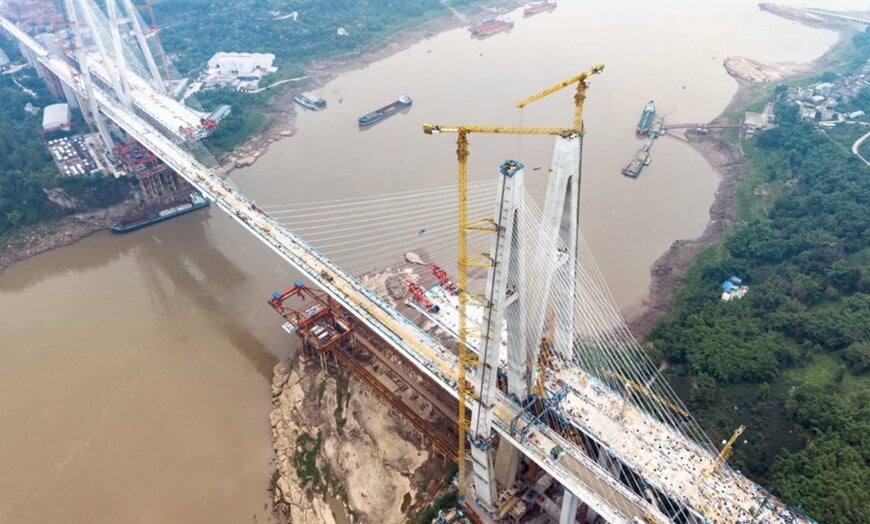
Deployment in Heavy Civil Engineering
The cranes are actively managing material placement for the bridge's twin-connected tower structure and split main-beam configuration. The primary technical use case involves the repetitive, high-load positioning of structural steel and concrete forms. The physical rigidity of the cranes ensures precise material placement despite challenging aerodynamic conditions, directly supporting process stability and site safety.
"We believed that the cranes would be particularly well suited to the Shituo Yangtze River Bridge because of their high working height and their ability to continue climbing beyond 200 m," stated Jin Zhongxue, general manager at Chongqing Haohai Construction Equipment.
The deployment of these high-capacity lifting systems facilitates the ongoing execution of the bridge structure, which will carry both road and high-speed rail traffic upon its scheduled completion at the end of 2026.
Edited by Aishwarya Mambet, Induportals Editor, with AI assistance.
www.manitowoc.com
Powered by
Induportals Media Publishing