The BUILD America 250 Act Moves Forward in the House
This five-year reauthorization for hundreds of billions of dollars worth of transportation and infrastructure spending maintains strong Buy America rules.
 machineryasia
This five-year reauthorization for hundreds of billions of dollars worth of transportation and infrastructure spending maintains strong Buy America rules.
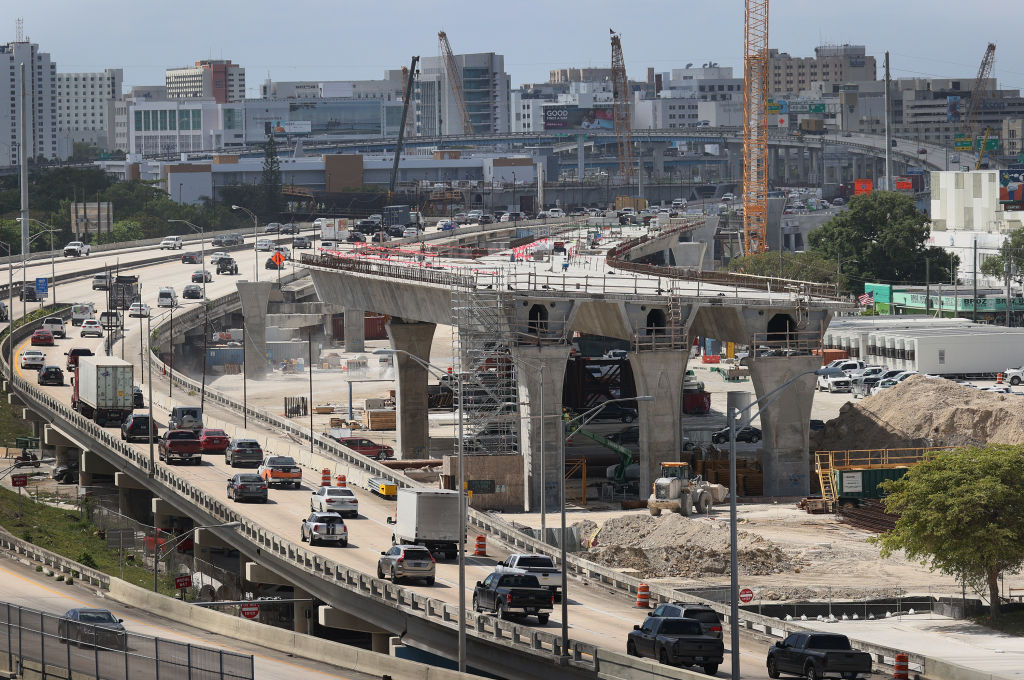
Late last week and very early in the morning after a marathon markup session, the U.S. House of Representatives’ Transportation and Infrastructure Committee did its part to reauthorize hundreds of billions of dollars of federal spending on roads, highways, bridges, transits, rail transportation and safety programs by approving the aptly named BUILD America 250 Act.
Importantly – and as both Republican and Democratic members pointed out after it cleared the committee – the bill maintains strong Buy America rules that will ensure the materials for all the work it authorizes are American-made. That’s the outcome a group of 30 committee Democrats were seeking in the days before the markup.
It’s also the outcome the Alliance for American Manufacturing (AAM) sought. As we put it in a letter to committee leadership early last week: “Federal transportation spending drives demand for the iron and steel, construction materials, and manufactured products used to build and maintain roads, bridges, transit systems, and other critical infrastructure.
“Ensuring these materials are produced in the United States through strong Buy America laws strengthens domestic supply chains and supports good paying American jobs.”
The Build America 250 Act includes other important items in its details. For instance, it orders a feasibility study into whether to include under Buy America rules yellow pigment; that’s the stuff that gives road markings their distinctive yellow color, and a union-represented factory in western Michigan makes lots of it. The reauthorization bill also includes another bill – the Safeguarding Transit Operations to Prohibit (STOP) China Act – which would close loopholes in a 2019 law that blocked federal transit funds from being used to buy transit buses, railcars and other rolling stock vehicles from companies owned or supported by the Chinese government. AAM supported the 2019 effort, and we support this update to make sure it works as intended.
House appropriators (the lawmakers who allocate funding throughout the government) are looking at that loophole, too. Their appropriations bill for the U.S. Department of Transportation specifically targets it (in Section 164). In Section 196, the bill prohibits federal assistance from going to “any entity that disseminates advertisements for a corporation, company, firm, partnership, joint stock company, or a subsidiary thereof, headquartered within the People’s Republic of China.”
And meanwhile, members of the House Energy & Commerce Committee – who are responsible for federal vehicle safety standards, which could be fitted into the larger surface transportation reauthorization bill – included in their title a prohibition on Chinese autos. It’s not dissimilar from the Connected Vehicle Security Act, put forward in the Senate by Sens. Elissa Slotkin (D-Mich.) and Bernie Moreno (R-Ohio) and in the House by Michigan Reps. John Moolenaar (R) and Debbie Dingell (D), which would codify an existing Commerce Department rule that bans connected vehicles, software, and hardware linked to China and other adversaries, starting in 2027. AAM supports that legislation (you can sign a petition to support it here) and we support the inclusion of that similar language from Energy & Commerce in the reauthorization bill.
Suffice to say: This surface transportation reauthorization bill is a big, heavy lift, and the Transportation and Infrastructure Committee should be commended on approving it in a bipartisan manner. The bill is not done, however. It has only passed out of committee; now it needs to be voted on by the full House. And then the focus will turn to the Senate, whose committees will have to consider this legislation next.
AAM will be watching closely as the bill progresses in the Senate. Stay tuned for more updates.