Tesmec Launches UG Line Range For Underground Cable Stringing Operations
The new modular and integrated portfolio from Tesmec offers pullers, pushers, and trailers designed to streamline low to ultra-high voltage underground cable installation. www.tesmec.com The deployment of low, high, and ultra-high voltage cables requires precise tension control to maintain cable integrity and process stability. The integration of modular stringing equipment into digital infrastructure allows operators to transition from isolated machinery to synchronized systems. This approach addresses the operational complexities found in dense urban environments and long-distance transmission corridors. System architecture and platform segmentation The technical solution relies on two primary hardware platforms engineered for specific operational parameters. The UG4 platform is designed for high and ultra-high voltage applications, managing high pulling forces over long stringing sections. The UG3 platform consists of compact, versatile machines optimized for standardized, mid-range installations. Both platforms utilize a shared design logic, which allows for consistent operational methodologies and uniform component interfaces across different machine classes. The basic configuration of each machine focuses on structural robustness and simplified operation, which can be modified via dedicated modular options depending on project requirements. Component integration and tension management A critical component within this infrastructure is the cable pusher, which manages bidirectional mechanical forces. The unit regulates pushing, pulling, and active cable braking. This multi-mode force control is required to maintain constant tension during variable environmental conditions and downhill gravity-assisted sections, preventing cable damage from over-tensioning or buckling. The complete ecosystem integrates pullers, cable pushers, drum stands, and trailers into a single operational unit. By utilizing standardized interfaces, these components coordinate field activities as a unified system rather than standalone assets, improving overall maintainability and safety on industrial jobsites. Implementation and operational deployment The initial models of the hardware platforms are deployed for active field operations, establishing the baseline for a progressive development roadmap. Future releases will expand the system to cover the full spectrum of underground utility installations. This phased implementation allows existing fleet infrastructure to gradually integrate connected, modular components, ensuring compatibility with evolving industrial automation standards. Edited by Evgeny Churilov, Induportals Media - Adapted by AI. www.tesmec.com Powered by Induportals Media Publishing
 machineryasia
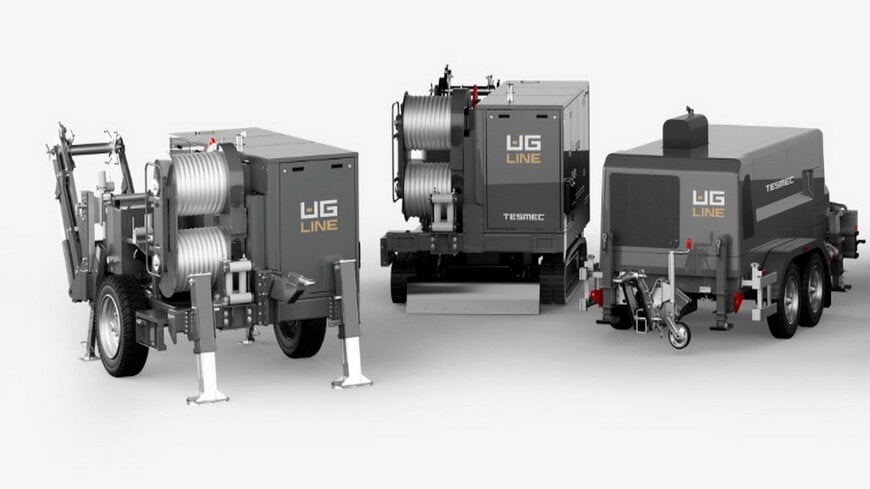
The new modular and integrated portfolio from Tesmec offers pullers, pushers, and trailers designed to streamline low to ultra-high voltage underground cable installation.
www.tesmec.com
The deployment of low, high, and ultra-high voltage cables requires precise tension control to maintain cable integrity and process stability. The integration of modular stringing equipment into digital infrastructure allows operators to transition from isolated machinery to synchronized systems. This approach addresses the operational complexities found in dense urban environments and long-distance transmission corridors.
System architecture and platform segmentation
The technical solution relies on two primary hardware platforms engineered for specific operational parameters. The UG4 platform is designed for high and ultra-high voltage applications, managing high pulling forces over long stringing sections. The UG3 platform consists of compact, versatile machines optimized for standardized, mid-range installations.
Both platforms utilize a shared design logic, which allows for consistent operational methodologies and uniform component interfaces across different machine classes. The basic configuration of each machine focuses on structural robustness and simplified operation, which can be modified via dedicated modular options depending on project requirements.
Component integration and tension management
A critical component within this infrastructure is the cable pusher, which manages bidirectional mechanical forces. The unit regulates pushing, pulling, and active cable braking. This multi-mode force control is required to maintain constant tension during variable environmental conditions and downhill gravity-assisted sections, preventing cable damage from over-tensioning or buckling.
The complete ecosystem integrates pullers, cable pushers, drum stands, and trailers into a single operational unit. By utilizing standardized interfaces, these components coordinate field activities as a unified system rather than standalone assets, improving overall maintainability and safety on industrial jobsites.
Implementation and operational deployment
The initial models of the hardware platforms are deployed for active field operations, establishing the baseline for a progressive development roadmap. Future releases will expand the system to cover the full spectrum of underground utility installations. This phased implementation allows existing fleet infrastructure to gradually integrate connected, modular components, ensuring compatibility with evolving industrial automation standards.
Edited by Evgeny Churilov, Induportals Media - Adapted by AI.
www.tesmec.com
Powered by
Induportals Media Publishing