Sandvik increases recycled carbide content to 75% in PowerCarbide grades
Sandvik is reducing reliance on virgin raw materials while maintaining the high performance and durability required in demanding rock drilling applications. www.home.sandvik Sandvik is raising the proportion of circular materials across its premium drilling portfolio, integrating up to 75% recycled cemented carbide into its PowerCarbide grades under the ReCarbide brand. Currently being introduced into commercial manufacturing, the formulation will become standard for all PowerCarbide drill bits globally throughout 2026 and 2027. Closed-Loop Material Recovery and Decarbonization The ReCarbide initiative leverages Sandvik’s closed-loop extraction infrastructure to reclaim secondary tungsten and cobalt from spent tooling: Emissions Reduction: ReCarbide lowers the raw-material carbon footprint by up to 70% in carbon dioxide equivalent emissions compared to using virgin mined resources. Resource Resilience: Minimizes reliance on newly extracted tungsten, mitigating raw material supply chain risks for critical industrial minerals. Global Infrastructure: Utilizes automated carbide extraction units stationed across all continents and mining hubs to dislodge and reclaim worn inserts from drill bit bodies. Standard Integration: Extends Sandvik’s recycling initiative—automatically paired with rock tool purchases since 2023—to feed secondary materials back into primary production lines. Application Performance Across Demanding Formations Field validation trials conducted in surface and underground environments have demonstrated that PowerCarbide grades containing up to 75% ReCarbide deliver mechanical wear resistance, toughness, and operational life comparable to or exceeding standard virgin grades. Verified applications include top-hammer, down-the-hole (DTH), and rotary blasthole drilling configurations across abrasive hard-rock geology. Additional Context This section details technical specifications not included in the original news release. Cemented tungsten carbide recycling relies primarily on two industrial extraction routes: the zinc recovery process and chemical digestion. In the thermal zinc process, molten zinc reacts with the metallic cobalt binder phase at elevated temperatures (typically between 850°C and 950°C) inside a vacuum furnace, forming a zinc-cobalt alloy. Distillation under low vacuum removes and recovers the volatile zinc, leaving behind a sponge-like, friable tungsten carbide skeleton that is mechanically pulverized into fine powder without altering the baseline tungsten carbide grain size or stoichiometry. Chemical recycling, by contrast, digests scrap carbide via high-temperature oxidation and alkaline pressure leaching into sodium tungstate, followed by solvent extraction and hydrogen reduction to yield high-purity virgin-equivalent ammonium paratungstate (APT). Producing high-performance rock drilling inserts from high-ratio recycled feedstocks requires strict control over secondary impurity phases, such as iron, titanium, and trace alkali metals, which can cause micro-void formation and brittle crack propagation under dynamic percussive loading. Sinter-HIP (Hot Isostatic Pressing) cycles operating at temperatures between 1350°C and 1450°C under argon gas pressures exceeding 50 to 100 bar ensure full densification, eliminating internal porosity and providing fracture toughness values exceeding 10 to 14 MPa·m^(1/2) alongside Vickers hardness ratings between 1200 and 1600 HV30, tailored for extreme impact resistance. Edited by Romila DSilva, Induportals Editor, with AI assistance. www.mining.sandvik Powered by Induportals Media Publishing
 machineryasia
Sandvik is reducing reliance on virgin raw materials while maintaining the high performance and durability required in demanding rock drilling applications.
www.home.sandvik
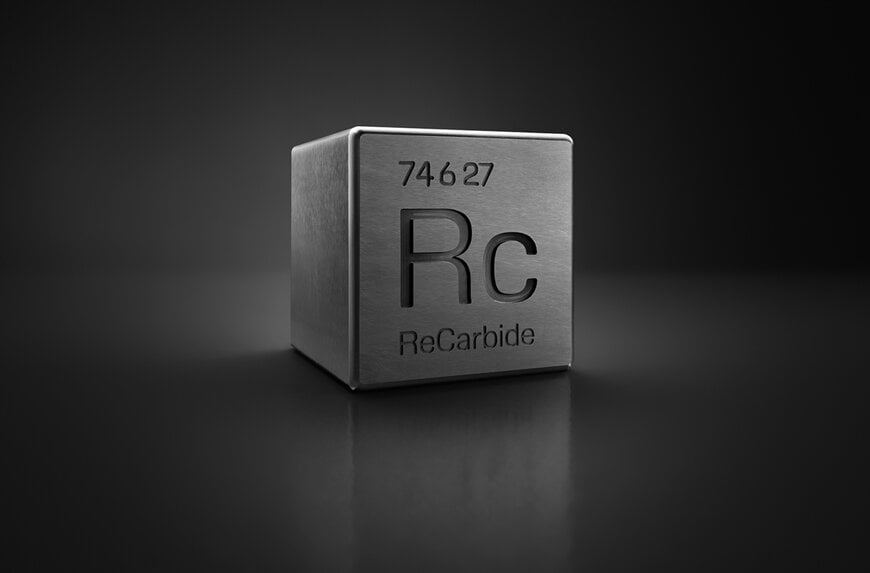
Sandvik is raising the proportion of circular materials across its premium drilling portfolio, integrating up to 75% recycled cemented carbide into its PowerCarbide grades under the ReCarbide brand. Currently being introduced into commercial manufacturing, the formulation will become standard for all PowerCarbide drill bits globally throughout 2026 and 2027.
Closed-Loop Material Recovery and Decarbonization
The ReCarbide initiative leverages Sandvik’s closed-loop extraction infrastructure to reclaim secondary tungsten and cobalt from spent tooling:
- Emissions Reduction: ReCarbide lowers the raw-material carbon footprint by up to 70% in carbon dioxide equivalent emissions compared to using virgin mined resources.
- Resource Resilience: Minimizes reliance on newly extracted tungsten, mitigating raw material supply chain risks for critical industrial minerals.
- Global Infrastructure: Utilizes automated carbide extraction units stationed across all continents and mining hubs to dislodge and reclaim worn inserts from drill bit bodies.
- Standard Integration: Extends Sandvik’s recycling initiative—automatically paired with rock tool purchases since 2023—to feed secondary materials back into primary production lines.
Application Performance Across Demanding Formations
Field validation trials conducted in surface and underground environments have demonstrated that PowerCarbide grades containing up to 75% ReCarbide deliver mechanical wear resistance, toughness, and operational life comparable to or exceeding standard virgin grades. Verified applications include top-hammer, down-the-hole (DTH), and rotary blasthole drilling configurations across abrasive hard-rock geology.
Additional Context
This section details technical specifications not included in the original news release.
Cemented tungsten carbide recycling relies primarily on two industrial extraction routes: the zinc recovery process and chemical digestion. In the thermal zinc process, molten zinc reacts with the metallic cobalt binder phase at elevated temperatures (typically between 850°C and 950°C) inside a vacuum furnace, forming a zinc-cobalt alloy. Distillation under low vacuum removes and recovers the volatile zinc, leaving behind a sponge-like, friable tungsten carbide skeleton that is mechanically pulverized into fine powder without altering the baseline tungsten carbide grain size or stoichiometry. Chemical recycling, by contrast, digests scrap carbide via high-temperature oxidation and alkaline pressure leaching into sodium tungstate, followed by solvent extraction and hydrogen reduction to yield high-purity virgin-equivalent ammonium paratungstate (APT).
Producing high-performance rock drilling inserts from high-ratio recycled feedstocks requires strict control over secondary impurity phases, such as iron, titanium, and trace alkali metals, which can cause micro-void formation and brittle crack propagation under dynamic percussive loading. Sinter-HIP (Hot Isostatic Pressing) cycles operating at temperatures between 1350°C and 1450°C under argon gas pressures exceeding 50 to 100 bar ensure full densification, eliminating internal porosity and providing fracture toughness values exceeding 10 to 14 MPa·m^(1/2) alongside Vickers hardness ratings between 1200 and 1600 HV30, tailored for extreme impact resistance.
Edited by Romila DSilva, Induportals Editor, with AI assistance.
Field validation trials conducted in surface and underground environments have demonstrated that PowerCarbide grades containing up to 75% ReCarbide deliver mechanical wear resistance, toughness, and operational life comparable to or exceeding standard virgin grades. Verified applications include top-hammer, down-the-hole (DTH), and rotary blasthole drilling configurations across abrasive hard-rock geology.
Additional Context
This section details technical specifications not included in the original news release.
Cemented tungsten carbide recycling relies primarily on two industrial extraction routes: the zinc recovery process and chemical digestion. In the thermal zinc process, molten zinc reacts with the metallic cobalt binder phase at elevated temperatures (typically between 850°C and 950°C) inside a vacuum furnace, forming a zinc-cobalt alloy. Distillation under low vacuum removes and recovers the volatile zinc, leaving behind a sponge-like, friable tungsten carbide skeleton that is mechanically pulverized into fine powder without altering the baseline tungsten carbide grain size or stoichiometry. Chemical recycling, by contrast, digests scrap carbide via high-temperature oxidation and alkaline pressure leaching into sodium tungstate, followed by solvent extraction and hydrogen reduction to yield high-purity virgin-equivalent ammonium paratungstate (APT).
Producing high-performance rock drilling inserts from high-ratio recycled feedstocks requires strict control over secondary impurity phases, such as iron, titanium, and trace alkali metals, which can cause micro-void formation and brittle crack propagation under dynamic percussive loading. Sinter-HIP (Hot Isostatic Pressing) cycles operating at temperatures between 1350°C and 1450°C under argon gas pressures exceeding 50 to 100 bar ensure full densification, eliminating internal porosity and providing fracture toughness values exceeding 10 to 14 MPa·m^(1/2) alongside Vickers hardness ratings between 1200 and 1600 HV30, tailored for extreme impact resistance.
Edited by Romila DSilva, Induportals Editor, with AI assistance.
Powered by
Induportals Media Publishing