Refuse Derived Fuel Offers Path to Sustainable Cement Production, Research Finds
The use of refuse-derived fuel (RDF) in cement manufacturing could help reduce the construction industry’s reliance on fossil fuels while diverting suitable combustible waste from landfills, according to a systematic review by researchers at Adelaide University. The research examines how waste-derived fuels could contribute to industrial decarbonisation and more sustainable waste management, while identifying regulatory […] The post Refuse Derived Fuel Offers Path to Sustainable Cement Production, Research Finds appeared first on World Construction Today.
 machineryasia
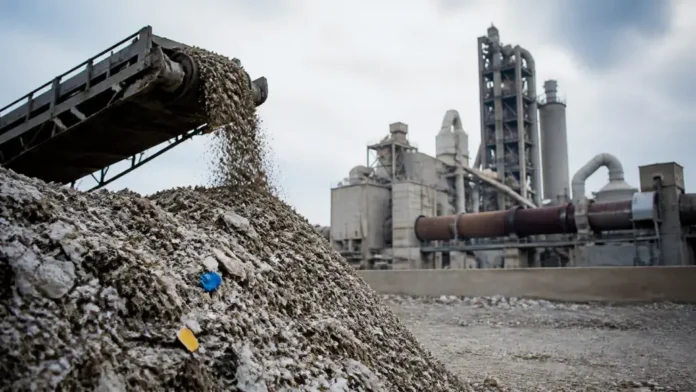
The use of refuse-derived fuel (RDF) in cement manufacturing could help reduce the construction industry’s reliance on fossil fuels while diverting suitable combustible waste from landfills, according to a systematic review by researchers at Adelaide University. The research examines how waste-derived fuels could contribute to industrial decarbonisation and more sustainable waste management, while identifying regulatory and technical challenges that must be addressed before wider adoption.
The study was led by Ph.D. candidate Geethmi Thisakya, working with supervisory team members Dr. Navodana Rodrigo, Dr. Chamitha Wijewickrama and Professor George Zillante. Published in the International Journal of Building Pathology and Adaptation, the review assessed global research on refuse-derived fuel in cement production, focusing on fuel quality, regulatory frameworks and the environmental and economic implications of its use.
Cement Production And The Waste Management Challenge
Cement remains an essential material for buildings, roads and infrastructure, but its manufacture is associated with substantial carbon dioxide emissions. The industry accounts for an estimated 8% of global CO₂ emissions and depends heavily on coal and other fossil fuels to generate the high temperatures required in cement kilns.
At the same time, significant quantities of combustible waste, including materials that cannot be recycled in practice, continue to be sent to landfills. Researchers suggest that suitable waste streams could provide an alternative source of energy for cement production, potentially addressing both challenges through better resource utilisation.
Refuse-derived fuel is produced by processing appropriate waste materials into fuel that can replace part of the conventional fossil fuel supply. When this fuel is used alongside traditional fuels in cement kilns, the process is known as co-processing.
The approach creates a potential connection between waste management and industrial energy demand. Rather than disposing of all combustible residual waste, suitable materials could be prepared for use in cement manufacturing. However, the researchers emphasise that this opportunity depends on consistent fuel quality, appropriate regulation and stronger evidence of the resulting environmental and economic impacts.
Research Review Highlights Fuel Quality And Standards
The research team reviewed 211 scholarly articles published between 1991 and July 2025, examining 48 sources in detail, including seven regulatory documents. The review found growing international interest in using RDF in cement manufacturing as a way to reduce landfill disposal and dependence on fossil fuels.
However, the findings also identified challenges in how waste-derived fuels are classified and evaluated. One issue is the widespread confusion between refuse-derived fuel and solid recovered fuel (SRF). Although both can be used in cement production, SRF is a more highly standardised form of waste-derived fuel.
Inconsistent terminology and varying quality standards can make it difficult to compare research findings across studies and countries. They can also complicate the interpretation of regulatory requirements and the assessment of fuel suitability for industrial use.
For cement manufacturers, reliable fuel specifications are important when evaluating alternative fuels for production. Differences in composition and quality can affect how consistently a fuel performs, making quality assurance and clear standards central to the responsible expansion of waste-derived fuel use.
Geethmi Thisakya said the research highlighted the need to connect waste management with industrial decarbonisation.
“Previous research has highlighted the potential of refuse-derived fuel to turn suitable waste materials into a useful resource rather than sending them to landfills,” Thisakya said. “However, our review shows that realizing this potential requires more than simply replacing coal with waste. We need consistent fuel quality, clear regulations and stronger evidence about the environmental and economic impacts.”
Regulatory Frameworks Needed For Wider Adoption
The review identifies clearer regulatory frameworks and stronger quality assurance systems as priorities for increasing confidence in alternative fuels. Consistent classification would help manufacturers understand the characteristics of available fuels, while more comparable standards could support the evaluation of different materials and regulatory approaches.
The researchers also stressed that cement manufacturers need assurance that alternative fuels can meet environmental requirements and support safe, reliable production. Without consistent specifications and suitable oversight, uncertainty about fuel quality could limit wider industrial uptake.
Thisakya said: “Cement manufacturers need confidence that alternative fuels will perform consistently, meet environmental requirements and support safe, reliable production,” Thisakya said. “Developing stronger quality assurance systems and clearer regulatory frameworks will help industry make informed decisions about using waste-derived fuels.”
The study points to the importance of comparing regulations across countries, as differences in classification and requirements can make it harder to establish consistent practices across markets. Better alignment in terminology and fuel quality assessment could help researchers and industry participants compare results and identify suitable approaches for different operating conditions.
Further Research Into Environmental And Economic Impacts
The researchers identified several priorities for future investigation, including improved fuel classification, stronger quality control, cross-country regulatory comparisons and more detailed assessments of environmental, economic and social impacts.
Further work is also needed to understand how RDF performs under different industrial and geographical conditions. These differences matter when assessing whether a particular waste stream is suitable for cement production and what outcomes may be achieved when it replaces conventional fuels.
The review does not suggest that all waste should be diverted to fuel production. Recycling and reuse should remain priorities, while RDF may offer an alternative for combustible materials that cannot practically be recycled.
For the construction sector, the findings highlight the potential role of waste-derived fuels in reducing dependence on conventional energy sources during cement manufacturing. Wider adoption, however, will require consistent fuel quality, clearer regulatory requirements and more robust evidence to evaluate environmental and economic performance.
By identifying gaps in research and standardisation, the Adelaide University review provides a basis for further work on integrating waste management practices with lower-carbon cement production. The extent of the benefits will depend on how these technical and regulatory challenges are addressed across different markets and manufacturing conditions.
The post Refuse Derived Fuel Offers Path to Sustainable Cement Production, Research Finds appeared first on World Construction Today.