Meet this Foldable, Infinitely Customizable Oregon-made Bike
Bike Friday from Eugene, Ore., builds each bike by hand from American-made Chromoly steel tubing -- but not before getting precise rider measurements first.
 machineryasia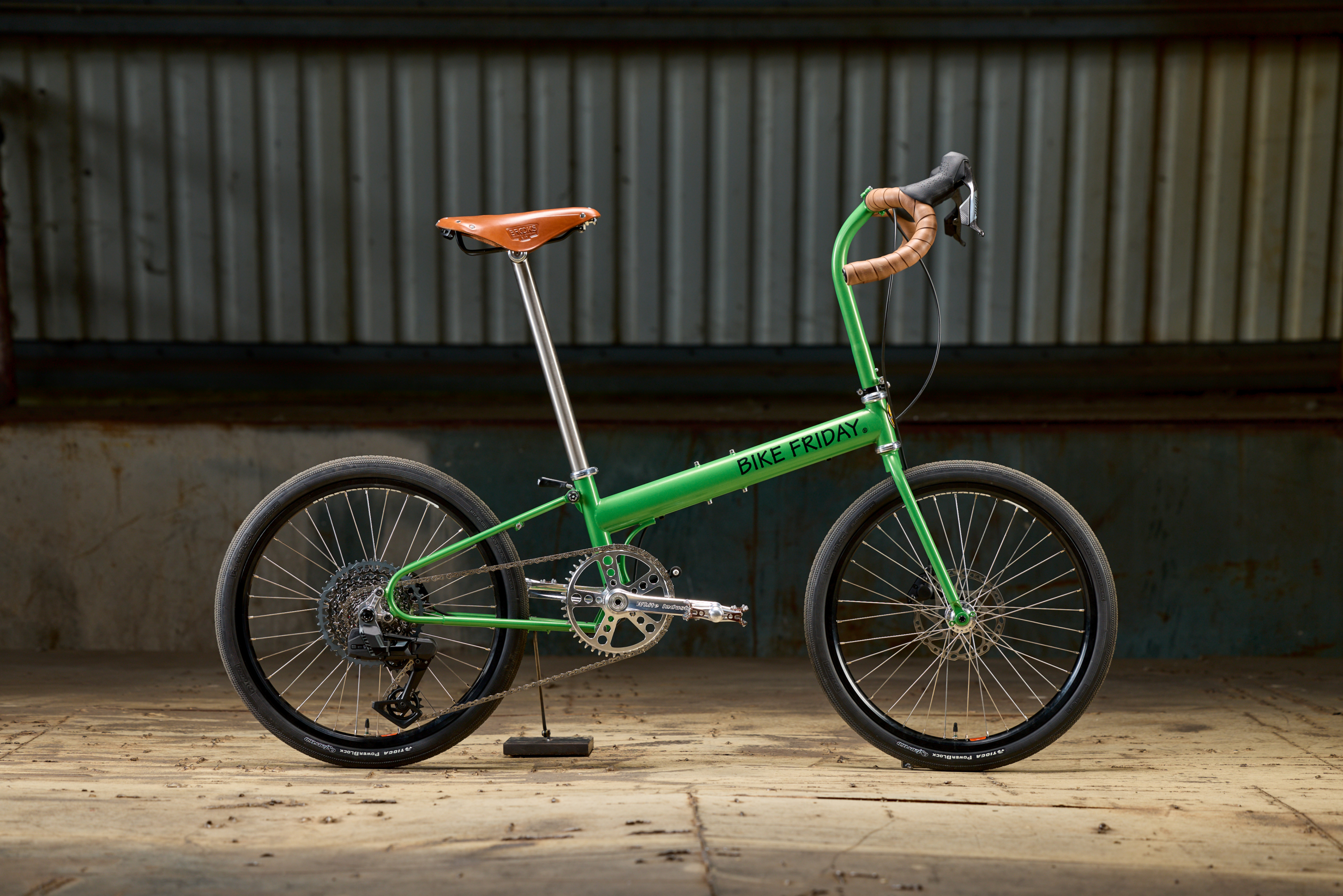
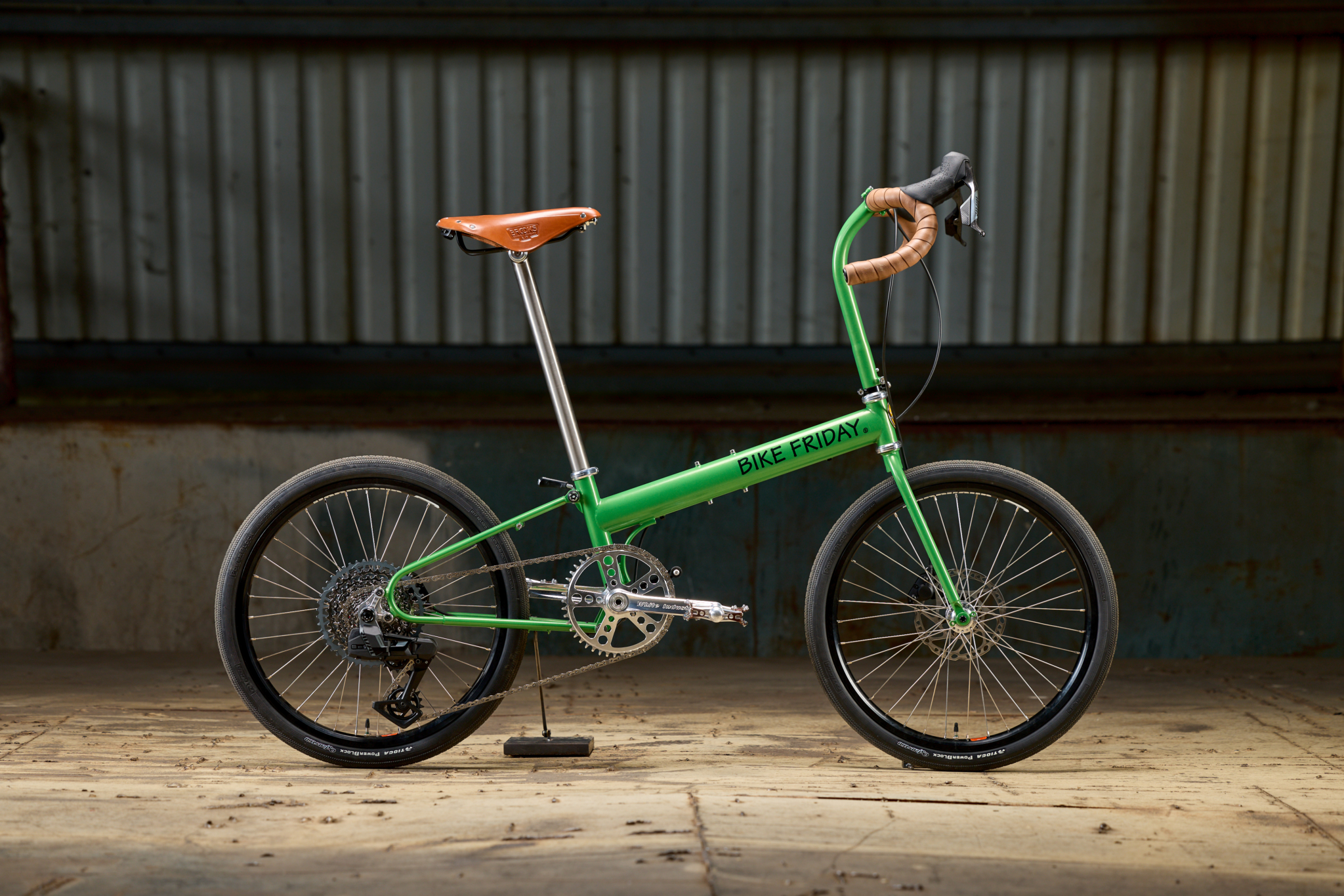
Bike Friday from Eugene, Ore., builds each bike by hand from American-made Chromoly steel tubing — but not before getting precise rider measurements first.
In a bicycle industry dominated by mass production and overseas manufacturing, Bike Friday has spent more than three decades proving its portable, high-performance two-wheelers can be made in America.
Inside a 13,000-square-foot facility in Eugene, Ore., employees transform raw steel tube into custom bicycles built one at a time for riders around the world. The company designs, engineers, welds and assembles its bikes in-house, creating machines tailored to the individual rider and built with a feature that has defined Bike Friday since its founding in 1992: the ability to travel almost anywhere.
“We have been designing from scratch, building our own tools and manufacturing from raw tubing to complete custom bikes for 34 years in Eugene, Oregon,” said Hanna Scholz, president of Bike Friday.
That commitment to domestic manufacturing has helped the company carve out a unique niche. Today, Bike Friday remains the only folding bike manufacturer in the United States and, according to Scholz, the only company in the world building custom high-performance folding bicycles.
The company traces its roots to a challenge faced by two dedicated cyclists: Hanna’s father Alan Scholz and her uncle Hanz Scholz. The brothers were bicycle racers who wanted bikes that could perform like traditional racing bicycles while also being practical for travel.
What began as a solution for serious riders evolved into a company producing roughly 10 different bicycle platforms. The lineup includes touring bikes, cargo bikes, tandems, commuter bikes, electric-assist models and off-road bicycles. Yet regardless of where a customer intends to ride, every model is built around the same philosophy.
“Our bikes are focused on a custom-sized high-performance ride and easy to take with you to wherever you want to ride,” Scholz said. “The focus for the design is not the folding and packing being primary. It’s the custom size and performance ride being primary, and to make it easy to take with you, the folding happens.”
The bikes begin with Chromoly steel tubing, a lightweight, high-strength alloy often used in demanding applications.
“The tubing we buy is American,” Scholz said. “It’s called Chromoly steel tube. It’s an alloy that is light and strong, aircraft quality, so it makes a frame that is really strong but also quite light.”
Bike Friday purchases its materials through distributors because the manufacturer is too small to buy directly from mills. Its primary suppliers include EMJ in Portland and Tube Service, both of which source material from American foundries.
“We don’t build enough quantity to buy a mill run from the foundry,” Scholz said. “One of them is EMJ out of Portland who buys mill runs and we buy portions from them. The main foundry that they get their supply from is in Chicago.”
Maintaining domestic sourcing remains a priority for the company. Scholz estimates that at least 80% of the materials used in Bike Friday’s bicycles are made in the United States.
“We have a sticker that we place on every bike that says Made in America or Made in Oregon,” she said.
The same philosophy extends to components whenever possible. Bike Friday offers American-made cranks, rims and headsets, although those options typically carry premium prices.
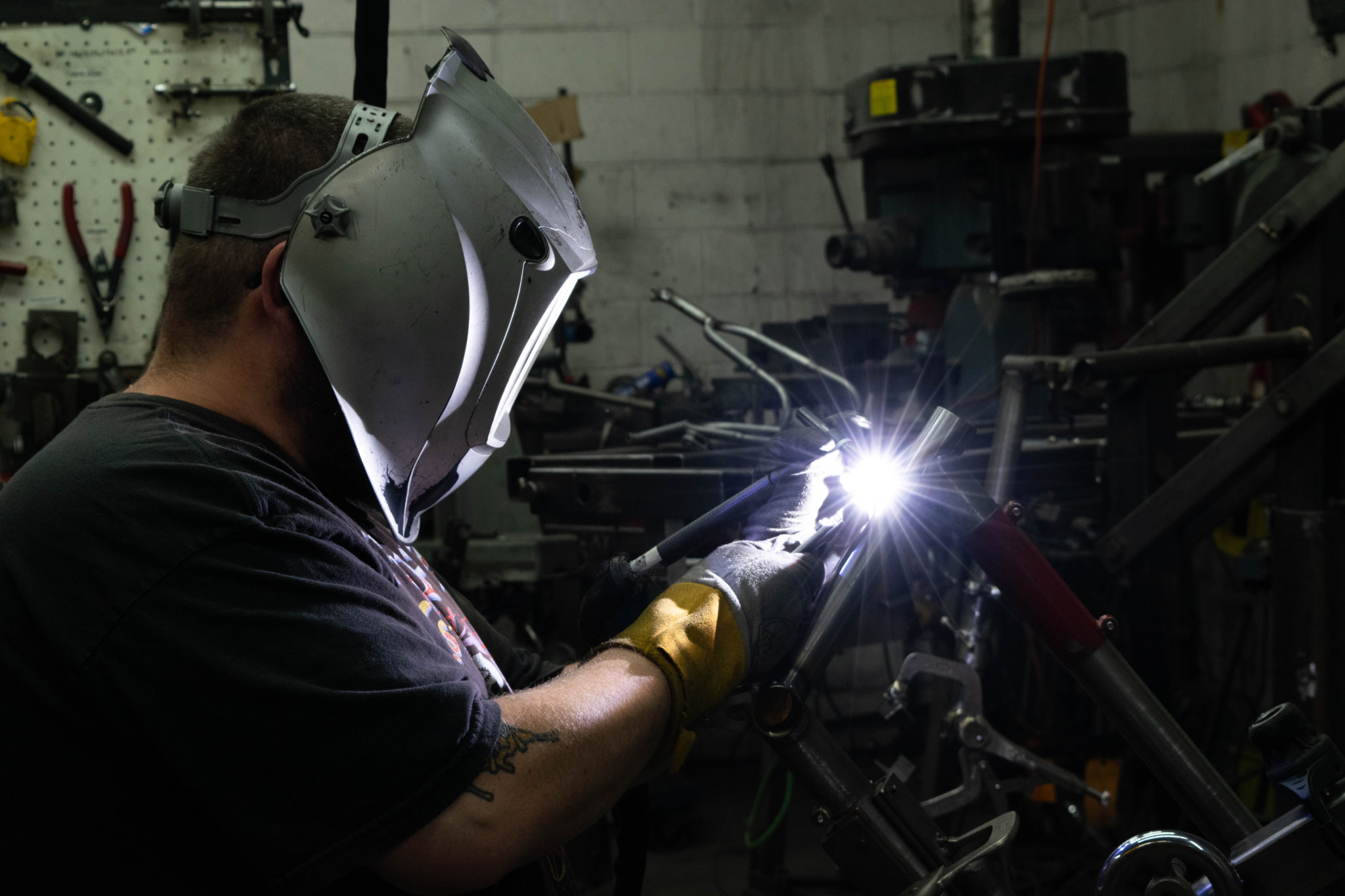
Bike Friday’s manufacturing model stands apart from much of the cycling industry because every bicycle is built to order. Customers begin by selecting a frame style, color, gearing and component options. More importantly, they provide detailed information about their body dimensions and riding preferences.
“We start with the customer first, get the customer’s sizing, color, gearing choices up front and then we build their order from raw tubing to finished bike,” Scholz said.
Unlike standard bicycle sizing, Bike Friday focuses on how each individual rider’s body is proportioned.
“Some people have really long legs and a short torso, and some people have a really long torso and short legs,” Scholz said. “It’s about how they want to sit on the bike. Do they want to sit upright or do they want to sit aggressively, like in a racer position?”
The company gathers extensive information before fabrication begins.
“We get all that information from them and we will build the frame so that they will sit on that bike in a way that’s comfortable for them,” Scholz said. “We build for thousands of combinations of human beings that are different shapes and sizes that sit on a bike in so many different ways.”
For travelers, the defining feature remains portability.
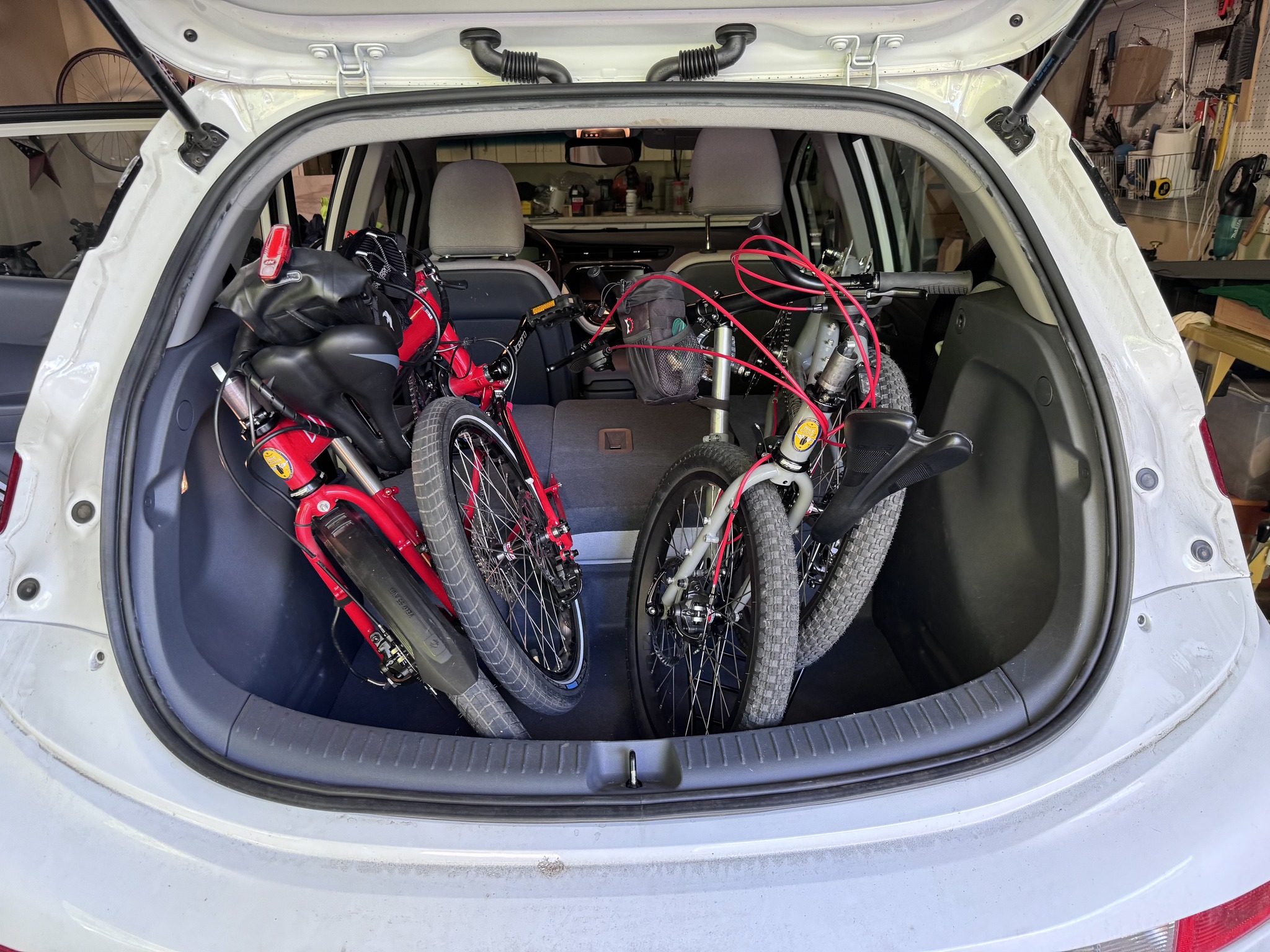
Bike Friday bicycles use 20-inch wheels rather than the 26-inch to 32-inch wheels commonly found on bikes. The smaller wheel size allows the bicycles to fit inside airline-checkable suitcases.
The company redesigned gearing and geometry to ensure performance remains comparable to larger bicycles.
“We’ve adjusted the gearing so the smaller wheel size doesn’t affect the pedaling or the distance the bike can be ridden,” she said.
The travel capability has created opportunities for extraordinary adventures.
Customers have taken Bike Fridays on multi-thousand-mile tours across the United States, on Arctic journeys and on extended international expeditions.
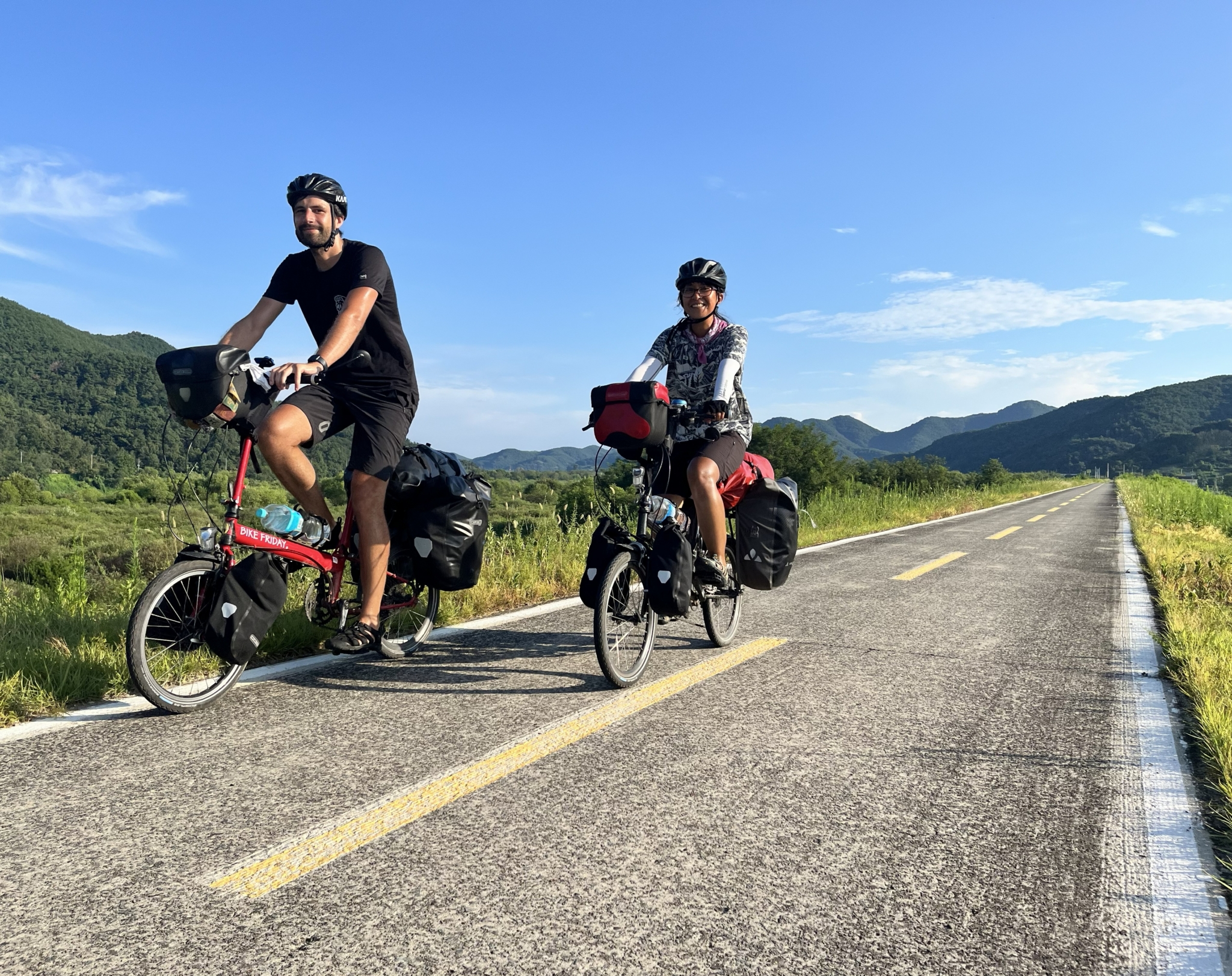
“Our customers have literally done a fully loaded camping bike trip across all continents under the Arctic,” Scholz said. “Going and riding 3,000 miles across the United States fully loaded with camping gear.
“We have a way of converting the suitcase into a trailer so that the bicycle can be packed in the suitcase with the trailer and fly on airplanes and then turn the suitcase into a trailer.”
Notable customers have included Heinz Stücke, recognized by Guinness World Records as the most traveled man by bicycle.
“When his most traveled man by bike title was challenged, he bought a Bike Friday so he could fold it up and go on little planes and little boats to go to all the little island countries,” Scholz said. “He was successful with a Bike Friday Pocket Llama folding bike.”
Stucke logged about 38,500 miles on his heavy-duty Pocket Llama, amassing 20,000 miles in just one year.
Author Lynette Chiang also used a Bike Friday during travels through Cuba that eventually inspired her book The Handsomest Man in Cuba.
While Bike Friday’s factory sits in Oregon, its market is increasingly global. The company sells directly to many U.S. customers while also working through dealers in Europe and Asia.
“We’ve got dealers in Germany and France and Scotland,” Scholz said. “Our largest dealers are in Japan and China.”
Yet for all that international success, Scholz says domestic sales have presented the biggest challenge because an uncertain economy has affected buying habits.
“My American sales have decreased the most. My international sales have been the strongest,” Scholz said. “People not knowing what is going to happen next with our economy makes them kind of scared and anxious and they feel they have to be careful making a decision to spend any money at all.”
The entry level Bike Friday, the PakiT, sells for $1,900 and the price for more advanced models goes up from there depending on what type of accessories the cyclist prefers. And, despite the challenges, Bike Friday continues to invest in its product line, including electric-assist bicycles that now account for roughly 15 to 20% of sales.
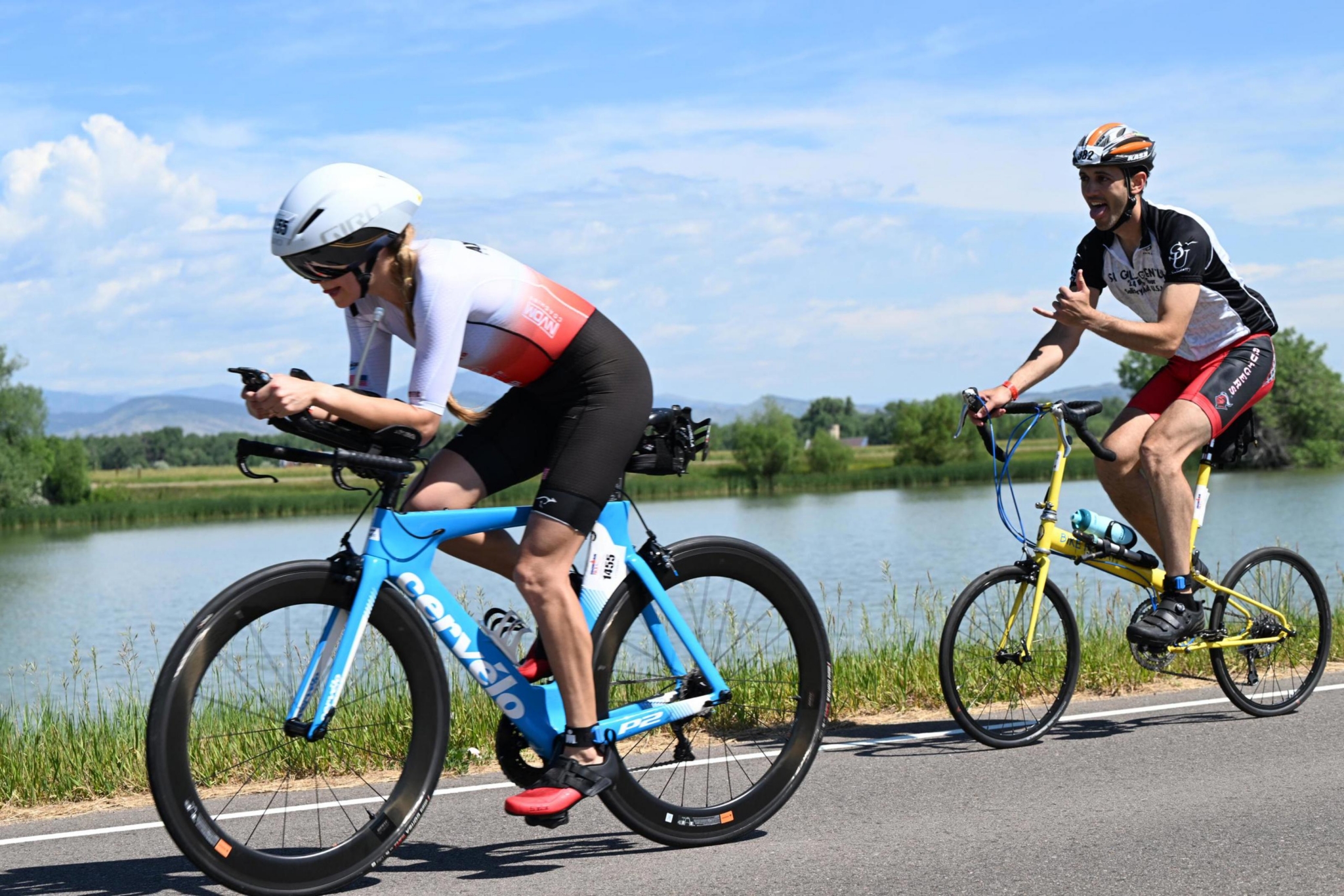
The company currently employs 20 people, with roughly eight workers building bicycles each day. Beyond manufacturing, employees handle design, engineering, purchasing, inventory management, customer support and marketing.
Scholz began working at the company full time in 2000 and now leads the company alongside her sister, making Bike Friday both a second-generation family business and a woman-owned manufacturer.
The company’s unusual name also reflects its culture.
“It’s a character from a book who was being helpful and supportive whenever needed,” Scholz said, explaining that the name traces back to the character Man Friday in Robinson Crusoe.
More than 30 years after Alan and Hanz Scholz started building bicycles in Eugene, the company continues to embrace that spirit of service, craftsmanship and adventure.
“We really like designing and making our own product in America and we are proud of it,” Scholz said. “I love being able to employ my neighbors so that they can be proud of making something that is high quality and has a positive impact on the customer. We love building things. And building here in America.”
The Alliance for American Manufacturing does not receive a commission from purchases made through the above links, nor was the organization or author paid for favorable coverage.
Labeling Note: This story is intended to highlight companies that support American jobs and that make great products in the United States. We rely on the companies listed to provide accurate information regarding their domestic operations and their products. Each company featured is individually responsible for labeling and advertising their products according to applicable standards, such as the Federal Trade Commission’s “Made in USA” standard or California’s “Made in USA” labeling law. We do not review individual products for compliance or claim that because a company is listed in the guide that their products comply with specific labeling or advertising standards. Our focus is on supporting companies that create American jobs.
For more on the Federal Trade Commission’s standards for “Made in USA” claims and California’s “Made in USA” labeling law, please also read this guest post by Dustin Painter and Kristi Wolff of Kelly Drye & Warren, LLP.