Mammoet Takes Delivery of Liebherr’s First Battery-Electric 150-Tonne Mobile Crane
The first deployment of Liebherr’s battery-electric LTM 1150-5.4E demonstrates how hybrid crane technology can reduce site emissions while maintaining full lifting performance. www.liebherr.com Battery-electric mobile crane enters real-world operation Mammoet has become the first customer to receive Liebherr’s LTM 1150-5.4E, a 150-tonne mobile crane equipped with a battery-electric drive. While prototype testing continues at Liebherr’s Ehingen facility, the crane has now entered practical operational trials within Mammoet’s fleet, marking an important step toward lower-emission heavy lifting on construction and infrastructure projects. Series production of the LTM 1150-5.4E is scheduled to begin in spring 2026. Hybrid drive architecture designed for emission-reduced lifting The LTM 1150-5.4E is based on Liebherr’s updated LICCON3 control platform and integrates a high-capacity battery pack that enables fully electric crane operation for up to four hours without an external power supply. When connected to a site power source, the battery acts as a buffer, allowing the crane to achieve full performance even with limited grid connection capacity. This configuration enables emission-free and low-noise crane movements during lifting operations, addressing increasingly strict environmental and noise requirements on urban and infrastructure sites. Operational analysis supports electric use cases Mammoet evaluated real operating data from cranes in the 150-tonne class to assess the suitability of battery-electric operation. Based on usage patterns across multiple regions in the Netherlands, the company estimates that the LTM 1150-5.4E can operate fully electrically on approximately nine out of ten working days. Compared with Mammoet’s earlier electric crane deployment — the LTC 1050-3.1E delivered in 2023 — the addition of an onboard battery significantly increases flexibility by reducing dependence on fixed power connections. Alignment with long-term sustainability targets The introduction of the LTM 1150-5.4E supports Mammoet’s broader strategy to reduce CO₂ emissions across its fleet. The company has already deployed electrically powered SPMTs, skidding systems and ring cranes, and continues to expand its portfolio of low-emission heavy lifting solutions in cooperation with equipment manufacturers. By integrating hybrid and battery-electric mobile cranes into regular operations, Mammoet aims to help customers lower project-related emissions while maintaining lifting capacity and operational efficiency. Responding to evolving jobsite requirements Demand for quieter, lower-emission equipment is increasing across energy, infrastructure and industrial construction projects. The LTM 1150-5.4E reflects this shift by combining conventional lifting performance with electric operation capabilities suited to modern jobsite constraints. With practical testing now underway, the crane provides an early indication of how battery-electric mobile cranes could be integrated into heavy lifting fleets as series production approaches. www.liebherr.com Powered by Induportals Media Publishing
 machineryasia
The first deployment of Liebherr’s battery-electric LTM 1150-5.4E demonstrates how hybrid crane technology can reduce site emissions while maintaining full lifting performance.
www.liebherr.com
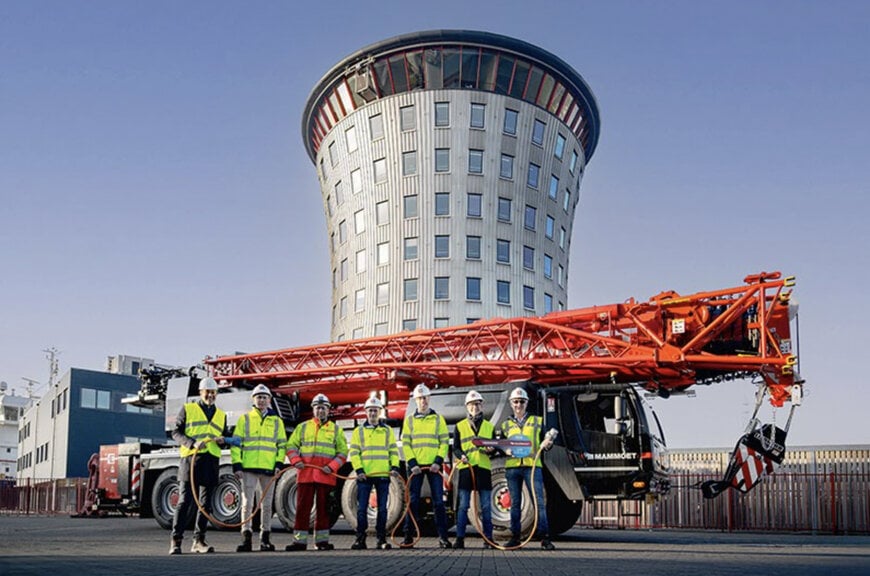
Battery-electric mobile crane enters real-world operation
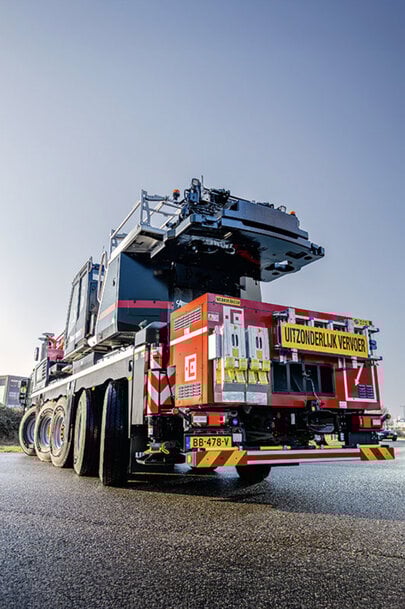
Mammoet has become the first customer to receive Liebherr’s LTM 1150-5.4E, a 150-tonne mobile crane equipped with a battery-electric drive. While prototype testing continues at Liebherr’s Ehingen facility, the crane has now entered practical operational trials within Mammoet’s fleet, marking an important step toward lower-emission heavy lifting on construction and infrastructure projects.
Series production of the LTM 1150-5.4E is scheduled to begin in spring 2026.
Hybrid drive architecture designed for emission-reduced lifting
The LTM 1150-5.4E is based on Liebherr’s updated LICCON3 control platform and integrates a high-capacity battery pack that enables fully electric crane operation for up to four hours without an external power supply. When connected to a site power source, the battery acts as a buffer, allowing the crane to achieve full performance even with limited grid connection capacity.
This configuration enables emission-free and low-noise crane movements during lifting operations, addressing increasingly strict environmental and noise requirements on urban and infrastructure sites.
Operational analysis supports electric use cases
Mammoet evaluated real operating data from cranes in the 150-tonne class to assess the suitability of battery-electric operation. Based on usage patterns across multiple regions in the Netherlands, the company estimates that the LTM 1150-5.4E can operate fully electrically on approximately nine out of ten working days.
Compared with Mammoet’s earlier electric crane deployment — the LTC 1050-3.1E delivered in 2023 — the addition of an onboard battery significantly increases flexibility by reducing dependence on fixed power connections.
Alignment with long-term sustainability targets
The introduction of the LTM 1150-5.4E supports Mammoet’s broader strategy to reduce CO₂ emissions across its fleet. The company has already deployed electrically powered SPMTs, skidding systems and ring cranes, and continues to expand its portfolio of low-emission heavy lifting solutions in cooperation with equipment manufacturers.
By integrating hybrid and battery-electric mobile cranes into regular operations, Mammoet aims to help customers lower project-related emissions while maintaining lifting capacity and operational efficiency.
Responding to evolving jobsite requirements
Demand for quieter, lower-emission equipment is increasing across energy, infrastructure and industrial construction projects. The LTM 1150-5.4E reflects this shift by combining conventional lifting performance with electric operation capabilities suited to modern jobsite constraints.
With practical testing now underway, the crane provides an early indication of how battery-electric mobile cranes could be integrated into heavy lifting fleets as series production approaches.
www.liebherr.com
Powered by
Induportals Media Publishing