Inland Waterway Infrastructure Maintenance System Deployed on Floating Pontoon
WSA Spree-Havel partnered with Gebr. Willing GmbH to integrate a customized duty cycle crane on a pontoon for regional waterway maintenance. www.sennebogen.com WSA Spree-Havel, in technical collaboration with equipment distributor Gebr. Willing GmbH and manufacturer SENNEBOGEN, integrated a customized duty cycle crane onto a floating pontoon for civil engineering across Berlin and Brandenburg inland waterways. The technical solution addresses maintenance, underwater excavation, and emergency recovery operations where hydraulic structures cannot be accessed by land-based machinery. Operational Requirements and Technical Scope Inland waterway infrastructure — including locks, weirs, and reinforced riverbanks — frequently requires heavy lifting and excavation in areas inaccessible to shore-based equipment. While conventional hydraulic excavators manage standard earthmoving profiles, operations in greater water depths require high line pull, broad working radiuses, and continuous duty cycles. Following the decommissioning of a previous unit, WSA Spree-Havel required a floating system capable of executing both crane lifting duties and heavy material handling across regional maintenance districts. System Integration and Safety Parameters The technical configuration comprises a duty cycle crane permanently secured to a refurbished industrial pontoon. Engineering parameters were coordinated between WSA Spree-Havel, SENNEBOGEN, and Gebr. Willing GmbH to adapt the machine for dynamic waterborne operations: Stability Monitoring: The machine incorporates an integrated heel angle monitoring system calibrated to maintain operational safety at vessel inclinations of up to 4°. Tool Interfacing: The mechanical system accommodates interchangeable attachments, including multi-shell and clamshell grabs, enabling precise underwater dredging and riprap stone placement. Structural Mobility: Mounted directly to the pontoon, the assembly navigates shallow and restricted channels to position lifting capacity directly adjacent to submerged assets. Deployment and Maintenance Operations Delivered to the Spandau operational district, the floating installation operates across the federal waterway network of Berlin and Brandenburg. Primary technical use cases include: Hydraulic Structure Maintenance: Executing heavy lifting operations during the dewatering and structural repair of locks and weirs. Channel Maintenance: Dredging sediment and reinforcing shoreline slopes using grab attachments. Emergency Response: Conducting waterway salvage, debris clearing, and rapid securing operations during maritime incidents. Gebr. Willing GmbH provides specialized operator instruction, functional training, and lifecycle maintenance support from its Falkensee facility to ensure technical availability and operational safety across all deployment districts. Edited by Evgeny Churilov, Induportals Media - Adapted by AI. www.sennebogen.com Powered by Induportals Media Publishing
 machineryasia
WSA Spree-Havel partnered with Gebr. Willing GmbH to integrate a customized duty cycle crane on a pontoon for regional waterway maintenance.
www.sennebogen.com
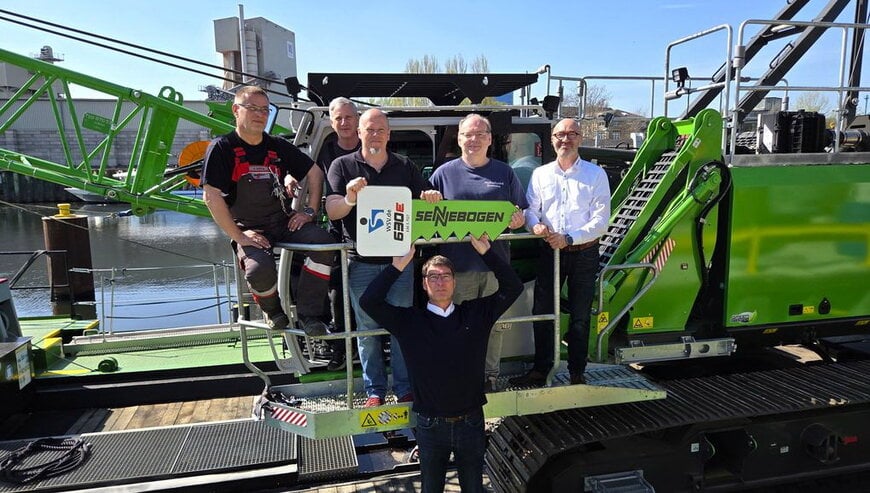
WSA Spree-Havel, in technical collaboration with equipment distributor Gebr. Willing GmbH and manufacturer SENNEBOGEN, integrated a customized duty cycle crane onto a floating pontoon for civil engineering across Berlin and Brandenburg inland waterways. The technical solution addresses maintenance, underwater excavation, and emergency recovery operations where hydraulic structures cannot be accessed by land-based machinery.
Operational Requirements and Technical Scope
Inland waterway infrastructure — including locks, weirs, and reinforced riverbanks — frequently requires heavy lifting and excavation in areas inaccessible to shore-based equipment. While conventional hydraulic excavators manage standard earthmoving profiles, operations in greater water depths require high line pull, broad working radiuses, and continuous duty cycles. Following the decommissioning of a previous unit, WSA Spree-Havel required a floating system capable of executing both crane lifting duties and heavy material handling across regional maintenance districts.
System Integration and Safety Parameters
The technical configuration comprises a duty cycle crane permanently secured to a refurbished industrial pontoon. Engineering parameters were coordinated between WSA Spree-Havel, SENNEBOGEN, and Gebr. Willing GmbH to adapt the machine for dynamic waterborne operations:
- Stability Monitoring: The machine incorporates an integrated heel angle monitoring system calibrated to maintain operational safety at vessel inclinations of up to 4°.
- Tool Interfacing: The mechanical system accommodates interchangeable attachments, including multi-shell and clamshell grabs, enabling precise underwater dredging and riprap stone placement.
- Structural Mobility: Mounted directly to the pontoon, the assembly navigates shallow and restricted channels to position lifting capacity directly adjacent to submerged assets.
Deployment and Maintenance Operations
Delivered to the Spandau operational district, the floating installation operates across the federal waterway network of Berlin and Brandenburg. Primary technical use cases include:
Delivered to the Spandau operational district, the floating installation operates across the federal waterway network of Berlin and Brandenburg. Primary technical use cases include:
- Hydraulic Structure Maintenance: Executing heavy lifting operations during the dewatering and structural repair of locks and weirs.
- Channel Maintenance: Dredging sediment and reinforcing shoreline slopes using grab attachments.
- Emergency Response: Conducting waterway salvage, debris clearing, and rapid securing operations during maritime incidents.
Gebr. Willing GmbH provides specialized operator instruction, functional training, and lifecycle maintenance support from its Falkensee facility to ensure technical availability and operational safety across all deployment districts.
Edited by Evgeny Churilov, Induportals Media - Adapted by AI.
www.sennebogen.com
Edited by Evgeny Churilov, Induportals Media - Adapted by AI.
www.sennebogen.com
Powered by
Induportals Media Publishing