Fuel cell power for heavy-duty, zero-emission transport
cellcentric and Daimler Truck introduce the BZA375, a next-generation fuel cell system engineered for high-performance, long-haul applications. www.daimlertruck.com cellcentric unveils the BZA375, a high-performance fuel cell system designed to meet the demanding requirements of heavy-duty transport and other intensive applications. Developed in under three years, the system combines advanced engineering, customer-driven design, and continuous optimization to deliver diesel-like performance with zero-emission operation. Engineered for total cost of ownership (TCO) The BZA375 is built around a clear focus on total cost of ownership, a critical factor in heavy-duty markets. By improving efficiency, reducing system complexity, and maintaining durability, the system enables competitive operating costs compared to conventional diesel engines. With up to 375 kW continuous power (over 500 hp) and a lightweight design under 500 kg, the BZA375 maintains payload capacity while delivering high performance. Efficiency, performance, and integration Compared to the previous generation, the BZA375 achieves significant improvements: Up to 20% lower hydrogen consumption, enabling less than 6 kg per 100 km for a fully loaded 40-ton truck 40% higher power density, supporting integration into existing vehicle platforms 40% reduction in system complexity, simplifying installation and maintenance 40% lower waste heat at high output, enabling more compact cooling systems The single-system architecture replaces earlier dual-system designs, allowing easier integration into engine compartments originally designed for diesel powertrains. Durability and readiness for industrial deployment The system maintains a service life of up to 25,000 operating hours, equivalent to approximately 10 years in heavy-duty applications. Prototype production is already underway, with systems currently undergoing validation and testing by customers ahead of series production planned for the end of the decade. Beyond trucking: a multi-application platform While optimized for long-haul trucks, the BZA375 is designed for a wide range of heavy-duty applications with similar requirements, including: Coaches and long-distance passenger transport Rail systems in non-electrified or hybrid routes Mining equipment operating in continuous cycles Stationary power generation for industrial and energy-critical facilities This cross-application approach supports a one-product strategy, enabling economies of scale and accelerating cost reductions in fuel cell technology. Enabling hydrogen-based mobility at scale The BZA375 represents a key step toward the decarbonization of transport, supporting the transition to hydrogen-powered mobility alongside battery-electric solutions. Its performance, flexibility, and scalability position it as a practical solution for zero-emission operations in demanding environments. By combining proven fuel cell expertise with a system ready for industrial integration, cellcentric advances from concept to deployable technology—delivering a powerful platform for sustainable heavy-duty mobility across multiple sectors. Edited by Maria Brueva, Induportals editor – adapted by AI. www.daimlertruck.com Powered by Induportals Media Publishing
 machineryasia
cellcentric and Daimler Truck introduce the BZA375, a next-generation fuel cell system engineered for high-performance, long-haul applications.
www.daimlertruck.com
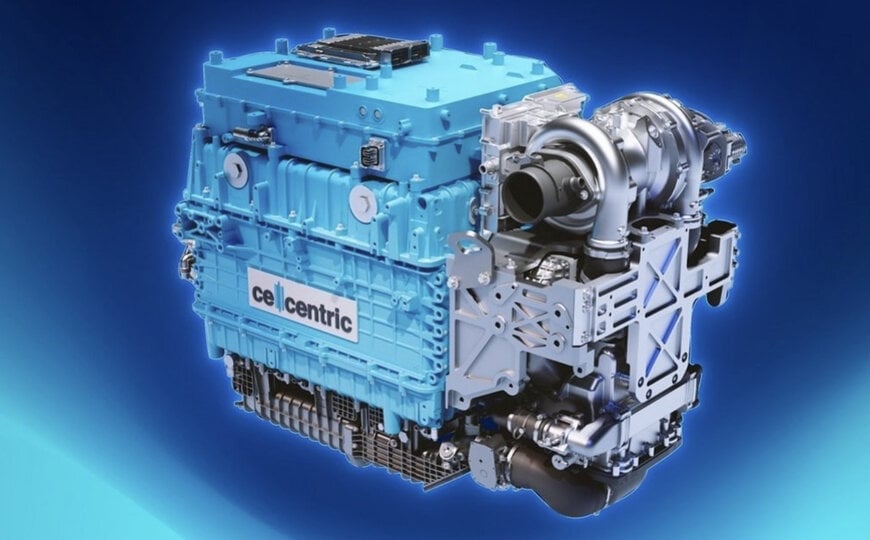
cellcentric unveils the BZA375, a high-performance fuel cell system designed to meet the demanding requirements of heavy-duty transport and other intensive applications. Developed in under three years, the system combines advanced engineering, customer-driven design, and continuous optimization to deliver diesel-like performance with zero-emission operation.
Engineered for total cost of ownership (TCO)
The BZA375 is built around a clear focus on total cost of ownership, a critical factor in heavy-duty markets. By improving efficiency, reducing system complexity, and maintaining durability, the system enables competitive operating costs compared to conventional diesel engines.
With up to 375 kW continuous power (over 500 hp) and a lightweight design under 500 kg, the BZA375 maintains payload capacity while delivering high performance.
Efficiency, performance, and integration
Compared to the previous generation, the BZA375 achieves significant improvements:
- Up to 20% lower hydrogen consumption, enabling less than 6 kg per 100 km for a fully loaded 40-ton truck
- 40% higher power density, supporting integration into existing vehicle platforms
- 40% reduction in system complexity, simplifying installation and maintenance
- 40% lower waste heat at high output, enabling more compact cooling systems
The single-system architecture replaces earlier dual-system designs, allowing easier integration into engine compartments originally designed for diesel powertrains.
Durability and readiness for industrial deployment
The system maintains a service life of up to 25,000 operating hours, equivalent to approximately 10 years in heavy-duty applications. Prototype production is already underway, with systems currently undergoing validation and testing by customers ahead of series production planned for the end of the decade.
Beyond trucking: a multi-application platform
While optimized for long-haul trucks, the BZA375 is designed for a wide range of heavy-duty applications with similar requirements, including:
Durability and readiness for industrial deployment
The system maintains a service life of up to 25,000 operating hours, equivalent to approximately 10 years in heavy-duty applications. Prototype production is already underway, with systems currently undergoing validation and testing by customers ahead of series production planned for the end of the decade.
Beyond trucking: a multi-application platform
While optimized for long-haul trucks, the BZA375 is designed for a wide range of heavy-duty applications with similar requirements, including:
- Coaches and long-distance passenger transport
- Rail systems in non-electrified or hybrid routes
- Mining equipment operating in continuous cycles
- Stationary power generation for industrial and energy-critical facilities
This cross-application approach supports a one-product strategy, enabling economies of scale and accelerating cost reductions in fuel cell technology.
Enabling hydrogen-based mobility at scale
The BZA375 represents a key step toward the decarbonization of transport, supporting the transition to hydrogen-powered mobility alongside battery-electric solutions. Its performance, flexibility, and scalability position it as a practical solution for zero-emission operations in demanding environments.
By combining proven fuel cell expertise with a system ready for industrial integration, cellcentric advances from concept to deployable technology—delivering a powerful platform for sustainable heavy-duty mobility across multiple sectors.
Edited by Maria Brueva, Induportals editor – adapted by AI.
www.daimlertruck.com
Enabling hydrogen-based mobility at scale
The BZA375 represents a key step toward the decarbonization of transport, supporting the transition to hydrogen-powered mobility alongside battery-electric solutions. Its performance, flexibility, and scalability position it as a practical solution for zero-emission operations in demanding environments.
By combining proven fuel cell expertise with a system ready for industrial integration, cellcentric advances from concept to deployable technology—delivering a powerful platform for sustainable heavy-duty mobility across multiple sectors.
Edited by Maria Brueva, Induportals editor – adapted by AI.
www.daimlertruck.com
Powered by
Induportals Media Publishing