This Montana Clothing Brand Has Found a Second Life for Deadstock
RevivALL Clothing fashions timeless pieces of women's American apparel from the garment industry's leftover fabrics.
 machineryasia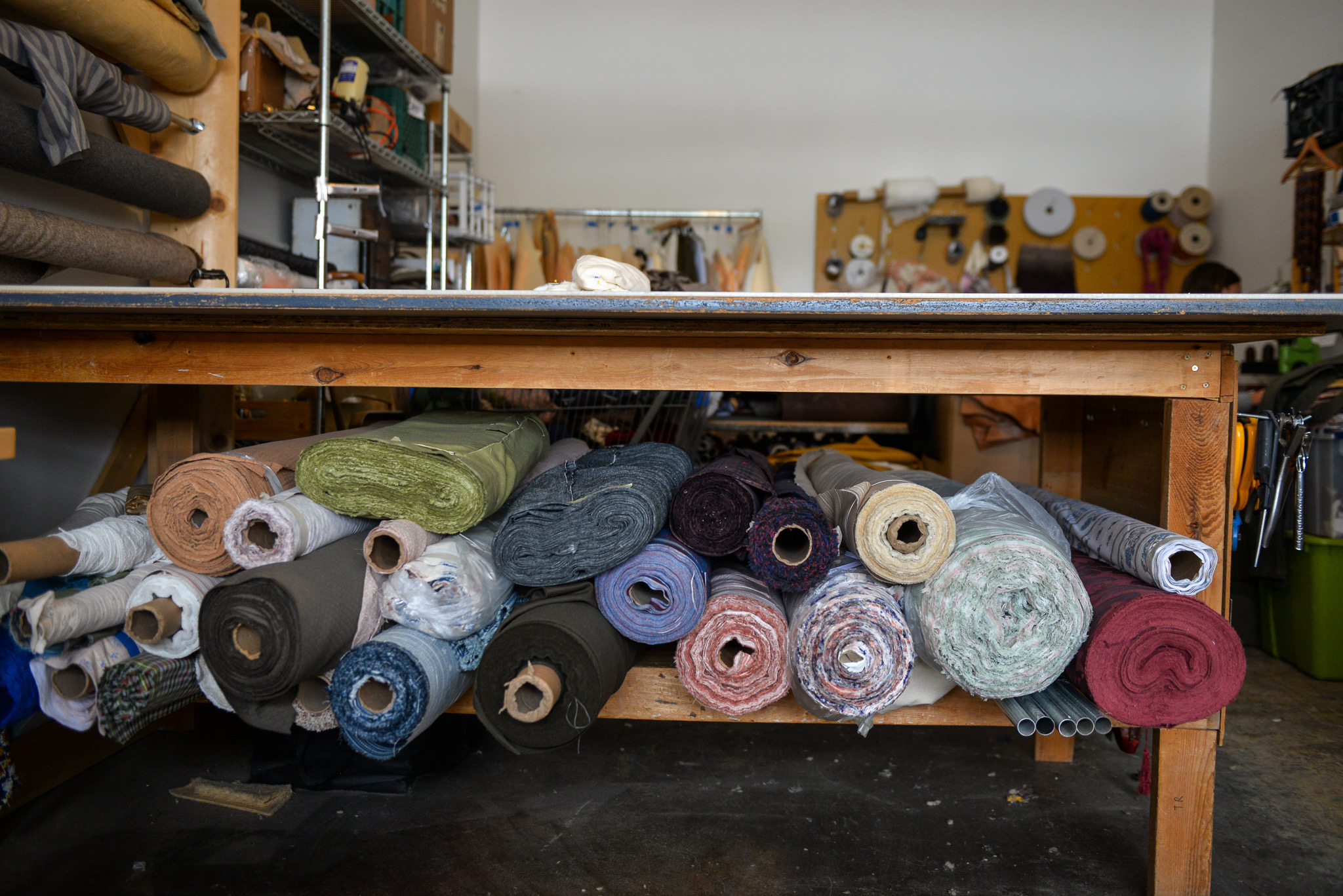
RevivALL Clothing fashions timeless pieces of women’s American apparel from the garment industry’s leftover fabrics.
Laura Fisher is bringing deadstock fabric to life.
Deadstock is the leftover material sitting on warehouse shelves after a clothing line is discontinued, a color falls out of fashion or a manufacturer simply orders too much. Perfectly usable wool, cotton, linen and other textiles can spend years gathering dust before eventually finding their way to landfills.
For Fisher, founder of RevivALL Clothing in Bozeman, Mont., deadstock marks the beginning of a story about the revival of women’s prairie-style clothing. Every skirt, petticoat, overall and dress produced by RevivALL starts with fabric that someone else overlooked. Fisher and her team scour sources for quality materials that already exist, transforming forgotten textiles into clothing that feels both timeless and distinctly American.
The idea for the company traces back to Fisher’s years studying fashion and working in New York City after graduating from Clemson University and attending the Fashion Institute of Technology.
“My grandma taught me how to sew when I was little,” Fisher said. “Then I got back into it in college just making stuff for my friends and I, and then I decided to go to fashion school.”
While working for an accessories designer in Manhattan, she encountered a side of the fashion industry that few consumers ever see.
“I would go to throw the trash away in the basement and the dumpsters would be full of fabric that was getting thrown away from the manufacturing floors,” Fisher said. “That is when I recognized how much waste existed in the industry and I started taking that back to my apartment in Brooklyn and making stuff out of it.”
The experience stayed with her. After spending months in New Orleans helping operate a nonprofit relief kitchen following Hurricane Katrina, she again found herself creating garments from donated materials.
Those experiences eventually led to the founding of RevivALL in Eugene, Ore., in 2008. Fisher built the company around the simple idea of giving overlooked fabrics a second life.
She moved the business to Montana in 2016 and has since been living a home-on-the-range lifestyle, which is reflected in her throwback designs.
“I think the aesthetic is modern prairie vibe and I always talk about it as sustainable, small batch, slow fashion,” Fisher said.
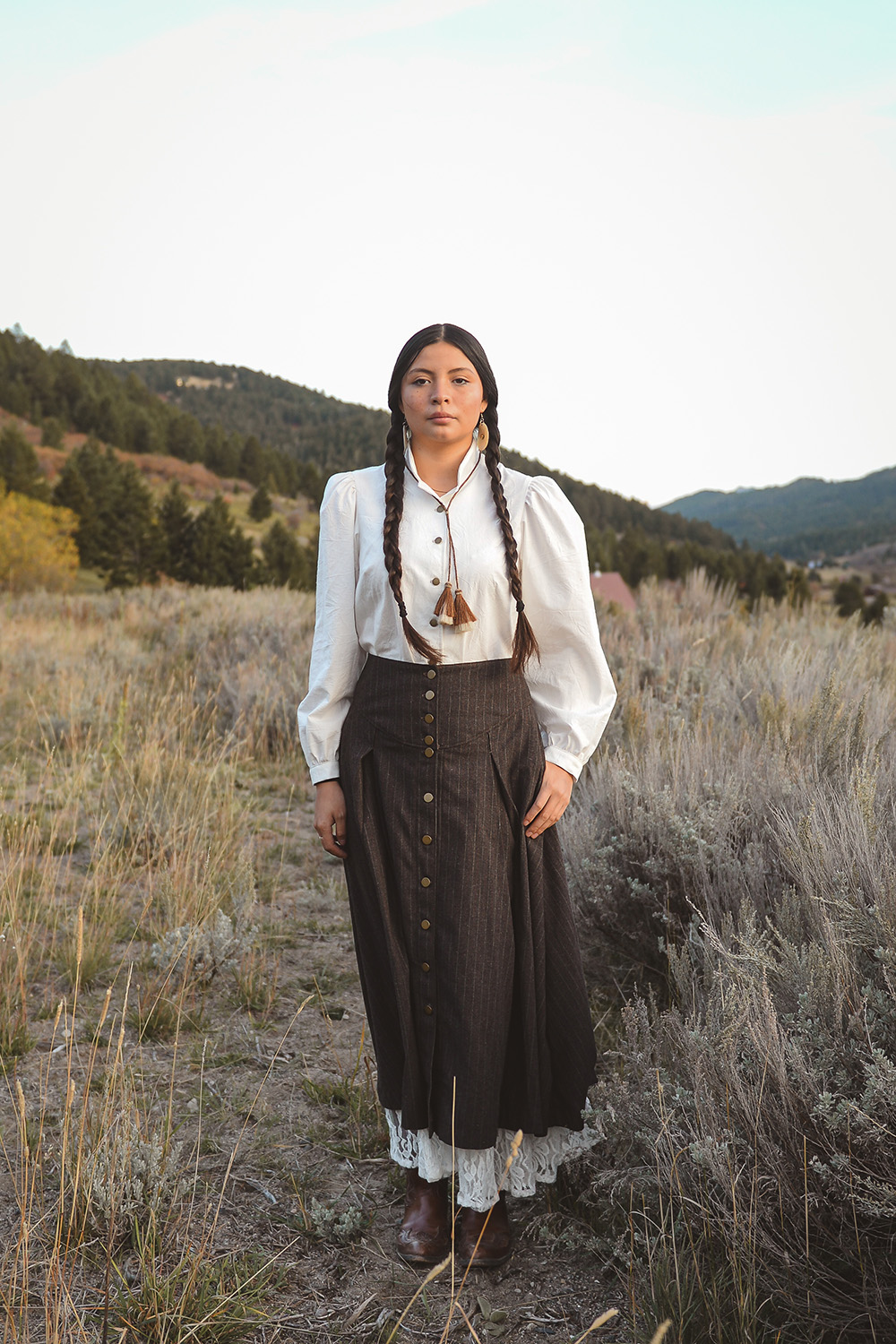
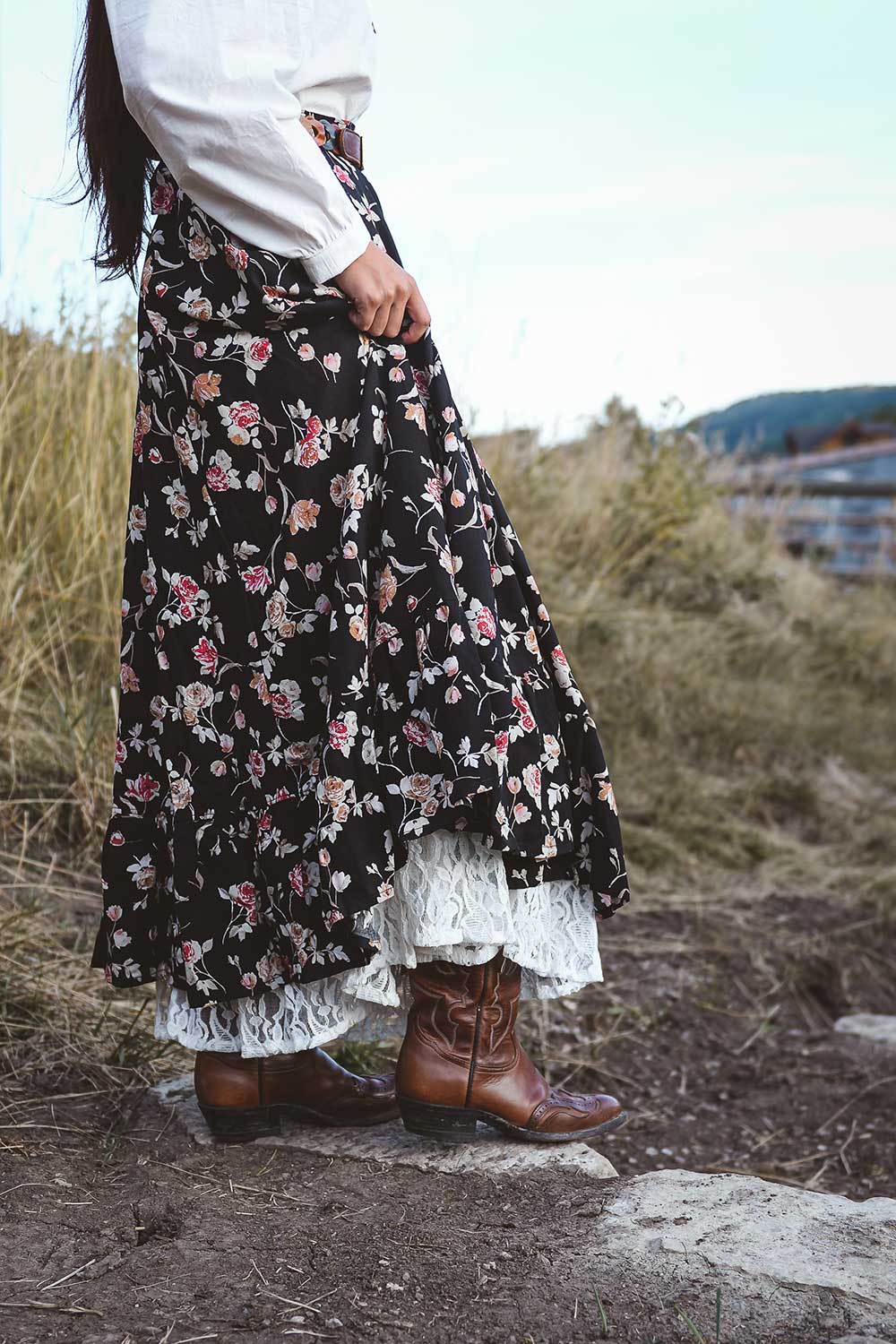
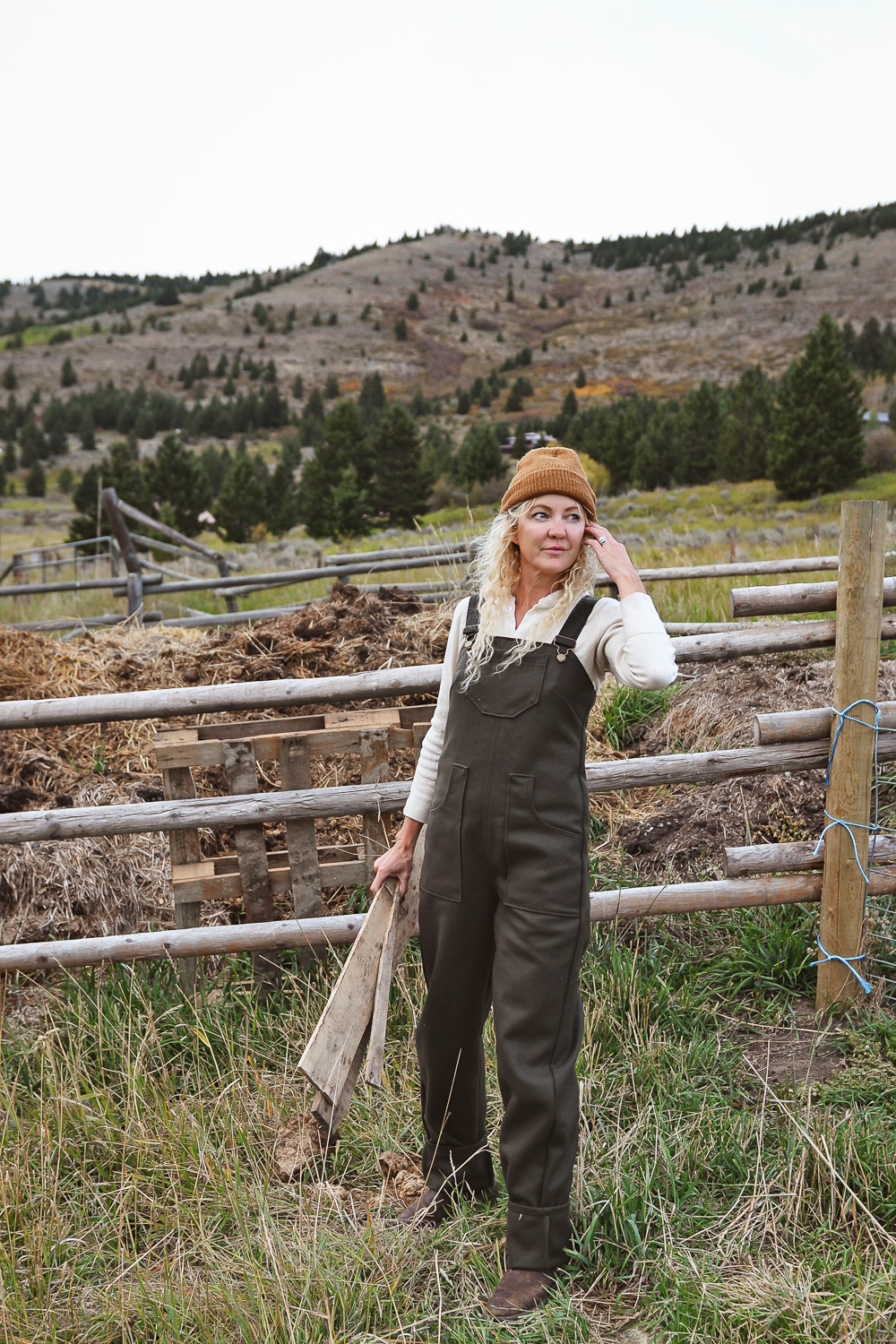
The garments evoke a distinctly American sense of nostalgia. Long prairie skirts, lace-trimmed petticoats, pinafores, wool overalls and flowing dresses draw inspiration from Victorian, Edwardian and frontier-era clothing while remaining wearable for everyday life.
Soft cottons, gingham patterns, calico prints, corseted backs and ruffled hems appear throughout the collection. Many designs begin with vintage garments Fisher discovers herself or cherished pieces customers bring to her.
“I usually get inspiration through vintage garments, through a photo or a piece that I find or that people bring me,” Fisher said. “I feel like my stuff speaks to people that kind of have a yearning for a simpler time, whether that be in the city or somebody who lives more rural.
“Mostly, I don’t think people are buying it as a fashion statement as much as a way of life or a way of life they identify with. I think my stuff is pretty versatile. I encourage people to wear them in an everyday theme but it is a little bit more on the dressier side but that’s kind of my goal; to make things someone could wear to a wedding or dinner or to go dancing but also to the grocery store.”
Finding fabric remains one of the most unusual parts of Fisher’s business. Several times a year she travels to Los Angeles and other sourcing hubs searching for deadstock textiles. One favorite stop in Los Angeles is Ragfinders of California, a warehouse packed with unused fabric from across the garment industry.
“Ragfinders is crazy,” Fisher said. “It is four floors, floor to ceiling of pallet and pallets of bolts of fabric. You could get lost in there. It’s a maze. It’s crazy and it is all leftovers from the garment industry.”
Unlike conventional brands that design first and source later, RevivALL often creates collections around the fabrics Fisher discovers. That creates built-in scarcity. If she finds an exceptional wool or cotton, production is limited by however much fabric exists.
“I have this amazing black pinstriped wool and I wanted to make a lot of things out of it this year,” she said. “There was only a certain amount of yardage available so I could make only 14 of the skirts and eight of the dresses.”
When the fabric is gone, it is usually gone for good.
Sustainability extends beyond fabric choices. Fisher says RevivALL operates according to three principles: using deadstock materials, minimizing waste and manufacturing close to home.
“I really think there is so much greenwashing in the industry,” Fisher said. “If I come across a brand and it says sustainable, I immediately go to their about page to see what they are considering sustainable.”
Most RevivALL garments are sewn in Montana, with additional production in Oregon and California. The company works with nine seamstresses, including longtime sewing partners in Oregon and Hutterite seamstresses in Montana.
Every garment carries a tag featuring the person who sewed it.
“I want to know who’s making my clothes,” Fisher said. “I really think that being a seamstress is being an artisan and we have just been so conditioned to undervalue clothing and sewing work because of fast fashion.
“There was a day, not even that long ago, when we were making all of our clothes in the U.S. I feel like the quality and craftsmanship is always superior when I am looking at vintage stuff made in the U.S.”
The company also strives for what Fisher calls “zero-ish waste.” Larger scraps become smaller products. Other remnants are saved for future uses, and she hopes eventually to turn the smallest pieces into stuffing for pillows, dog beds and other products.
Even the packaging reflects that mindset. Orders ship primarily in recyclable cardboard, and Fisher avoids plastic whenever possible.
That commitment to quality and authenticity has not gone unnoticed. A few years ago, one of RevivALL’s bestselling wool overalls was copied by a Chinese manufacturer that stole her photos, videos and marketing copy to sell cheaper polyester versions online.
“They made more knockoff overalls than I have ever made in my entire 18-year career in this business,” Fisher said.
The experience reinforced the differences between mass-produced clothing and handcrafted garments made by skilled workers.
For Fisher, however, the story is ultimately about more than sustainability or manufacturing.
It is about connection.
“I say all of my clothes have a story and it shows,” she said. “When people wear my stuff, they get compliments all the time.”
Customers frequently tell her about conversations sparked by a skirt, a dress or a pair of overalls.
“I think that’s what I am trying to emphasize the most,” Fisher said. “The connection to your clothes instead of just kind of the late-night online buy that you forgot about.”
In a fashion industry often defined by speed, volume and constant change, RevivALL offers something different. Forgotten fabrics become treasured garments. Small batches replace mass production. The person sewing the garment is as important as the person wearing it.
And in the hands of Laura Fisher, deadstock fabric doesn’t represent the end of the line. It is another chance to start a new one.
The Alliance for American Manufacturing does not receive a commission from purchases made through the above links, nor was the organization or author paid for favorable coverage.
Labeling Note: This story is intended to highlight companies that support American jobs and that make great products in the United States. We rely on the companies listed to provide accurate information regarding their domestic operations and their products. Each company featured is individually responsible for labeling and advertising their products according to applicable standards, such as the Federal Trade Commission’s “Made in USA” standard or California’s “Made in USA” labeling law. We do not review individual products for compliance or claim that because a company is listed in the guide that their products comply with specific labeling or advertising standards. Our focus is on supporting companies that create American jobs.
For more on the Federal Trade Commission’s standards for “Made in USA” claims and California’s “Made in USA” labeling law, please also read this guest post by Dustin Painter and Kristi Wolff of Kelly Drye & Warren, LLP.