Does Trump Want to Rebalance Trade with China? Here’s what he needs to do.
China has exploited its permanent normal trade relations status with the United States since the trade advantage took effect in 2001.
 machineryasia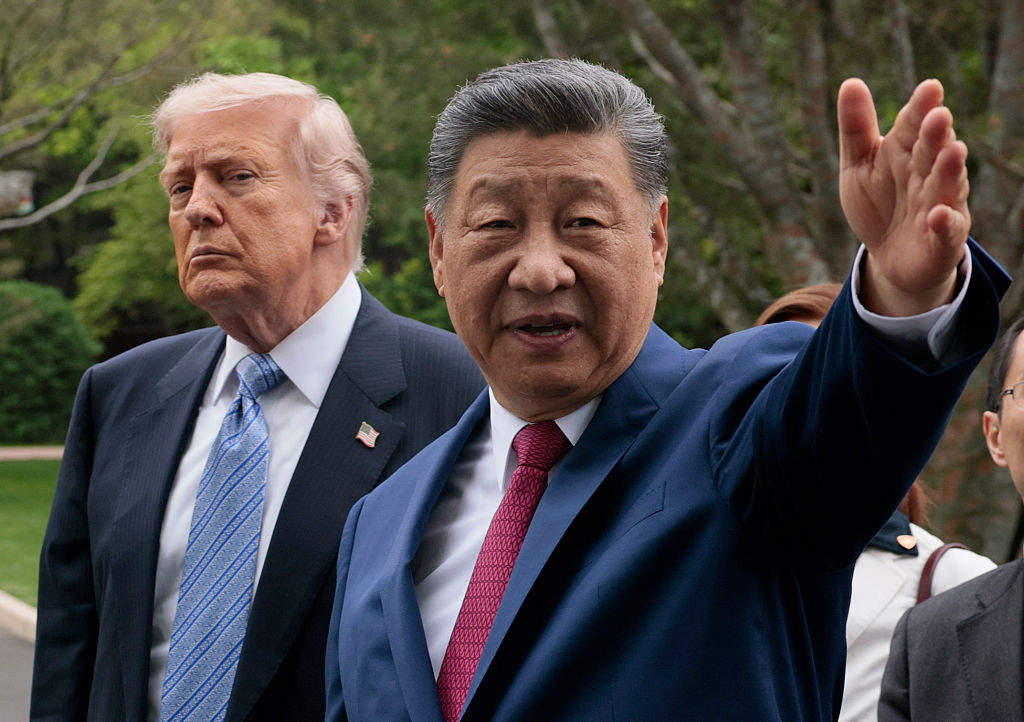
China has exploited its permanent normal trade relations status with the United States since the trade advantage took effect in 2001.
Chinese President Xi Jinping touches down in Washington, D.C., for the first time in 11 years this Wednesday. His arrival is expected to be met with spectacle, but the state visit gets serious on Thursday, when Xi is slated to officially meet with President Donald Trump. There are plenty of issues for the two leaders to hash out, including the trajectory of artificial intelligence and Iran. However, extending a U.S.-China trade truce is reportedly topmost on China’s agenda.
Xi is said to be aiming for a reciprocal tariff suspension extension, with the pause otherwise expiring on Nov. 10. But Beijing has done little to warrant more trust in its trade practices. Indeed, China continues to artificially lower its currency’s value and circumvents U.S. tariff barriers, as Alliance for American Manufacturing President Scott Paul states in a new Newsweek opinion. In particular, Paul is urging Trump to hold firm in three areas of the U.S-China trade relationship:
“[W]hile Trump has indelibly altered the bilateral trade dynamic, he risks squandering any leverage he’s created if he ignores China’s three big ‘C’s’ that spell trouble for American manufacturing: cars, currency and chips.”
Meanwhile, China’s global trade surplus in 2026 is expected to match last year’s record $1.2 trillion, forcing out manufacturers in foreign markets with its glut of exports. In Europe, domestic manufacturers are staring down the potential loss of a gob-smacking 300,000 jobs in the latter half of 2026.
And, last month, G20 finance chiefs, with the exception of China’s representative, said in a statement that “countries with excessive and persistent external surpluses should remove distortions that constrain domestic consumption and that result in an over-reliance on exports for growth.” (They’re looking at you, China.) And Chinese import pressure is only increasing as Beijing looks to escape its lagging domestic consumption.
There’s unlikely to be a major rejiggering of the U.S.-China trade relationship in the wake of this week’s meeting (as the absence of a Chinese corporate delegation is but one indication). However, there is one major step that would accomplish just that.
For years, we’ve been calling for Congress and the White House to end China’s permanent normal trade relations (PNTR) with the United States, which locked tariffs for Chinese exports at a low baseline, removed those tariff rates from an annual congressional review, and created the environment in which Chinese imports flooded the American market since it was first granted PNTR in 2000. That decision was guided by the hope that giving China PNTR would encourage the nation to become more open and democratic.
These expectations have been disappointed for decades.
“Congress must accept the reality that the United States faces an authoritarian economic power that is growing increasingly so, and which for decades has employed a form of state-controlled neo-mercantilism to imbalance bilateral trade, steal U.S. intellectual property, and destabilize the jobs of millions of American workers,” Paul wrote in a 2023 RealClearPolitics opinion.
Support for revoking China’s PNTR is growing on Capitol Hill, and the U.S. International Trade Commission recently investigated the possible economic impacts of the move.
Moreover, polling conducted by Morning Consult on AAM’s behalf in 2023 found that 57% of registered voters want to end PNTR for China, with 28% of respondents saying they “strongly support” doing so and 29% said they “somewhat support” it. Only 6% said they’d “strongly oppose” such a move.
China has long exploited its PNTR status. If Trump and Congress want to level the playing field for American workers, it’s past time they revoke it.